

Table Of Content
- Executive Summary: Automating the Buyer Mind
- Predictive Accuracy
- Real-Time Capture
- Sovereign Growth
- Hyper-Personalization
- The Current State of Consumer Behavior Analysis in India
- How Machine Learning Transforms Customer Insight Gathering
- Real-Time Behavioral Pattern Tracking
- The Urgency-Pain-Pay Trinity Segmentation
- Key Heartland Insights Unlocked via Artificial Intelligence
- Fintech Sourcing Stack: Technical Components Compared
- Institutional Case Studies: Subcontinental Conversion Moats
- Flipkart’s Algorithmic Regional Demand Forecasting
- Myntra’s Machine Learning Size and Trend Predictions
- The Phased Capital Implementation Roadmap
- Critical Strategy Pitfalls to Systematically Prevent
- Strategic Guidelines for Direct Brand Operators
- Conclusion: Empirical Insight Outperforms Guesswork
- Frequently Asked Questions
The mathematical integration of artificial intelligence and machine learning layers is completely reconstructing the methodology of consumer behavior analysis in India within the modern retail network. Transitioning swiftly away from legacy spreadsheet models, subcontinental direct-to-consumer (D2C) brands now implement automated algorithmic profiling to capture conversions. This intelligence-first structural paradigm enables founders to decode complex buyer journeys across diverse markets with total empirical precision.
When initializing my premier retail ventures over a decade ago, tracking audience choices meant relying on historical post-purchase logs, offline manual reviews, and basic intuition scripts. Today, the operational reality has transformed: a massive 82% of subcontinental consumers express clear readiness to improve their purchasing choices via predictive machine learning features. This unprecedented behavioral receptivity constructs a definitive opportunity for brand builders to implement automated personalization pathways.
Executive Summary: Automating the Buyer Mind
An institutional research brief tracking the tech stacks, regional pattern recognitions, and predictive forecasting tools defining consumer behavior analysis in India:
Predictive Accuracy
Advanced machine learning architectures map buyer pattern variables with an ironclad 85% to 90% forecasting accuracy ceiling.
Real-Time Capture
Continuous click-stream analysis and session recording tools compress user tracking latency from weeks into milliseconds.
Sovereign Growth
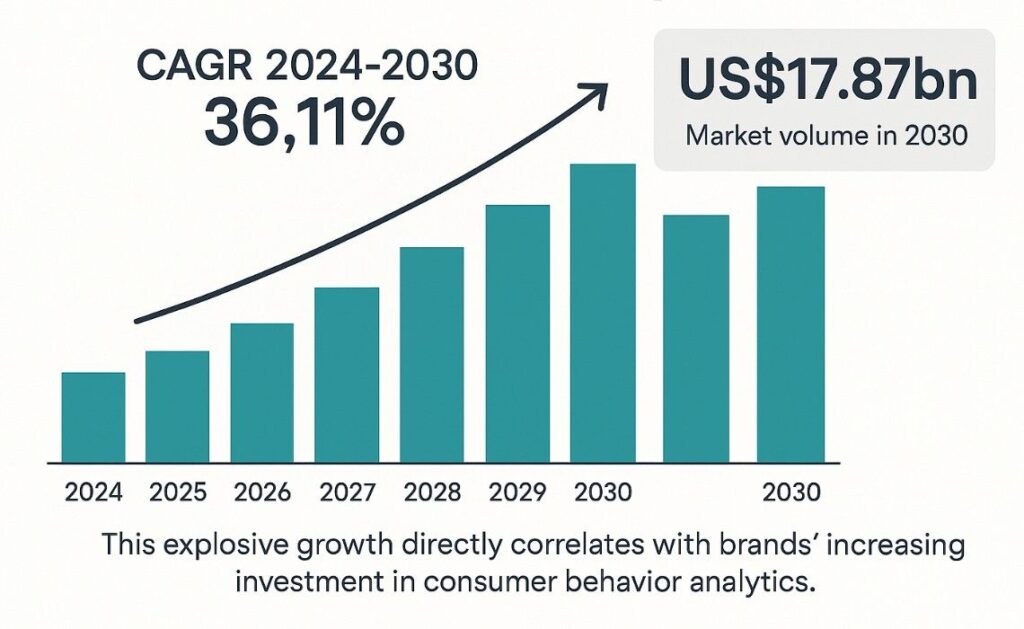
The domestic subcontinental machine learning software space is scaling at a 36.11% CAGR, heading toward a $17.87 Billion volume milestone by 2030.
Hyper-Personalization
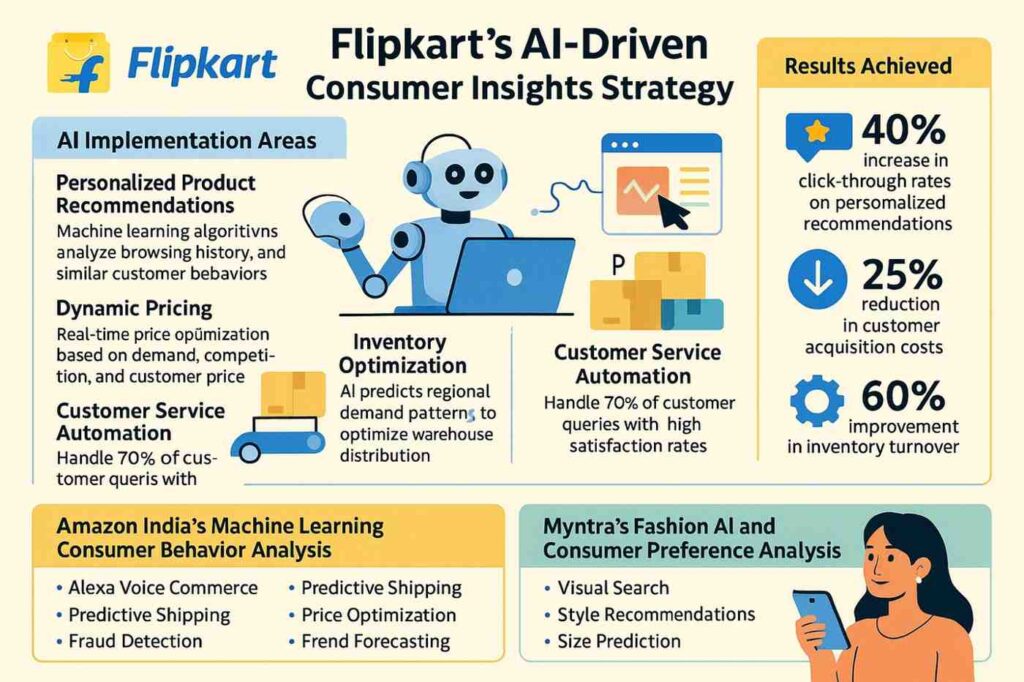
Automating context-aware recommendation models across checkout viewports triggers a 40% conversion lift while trimming acquisition costs (CAC) by 25%.
The Current State of Consumer Behavior Analysis in India
The subcontinental consumption geography carries deep layers of systemic fragmentation: presenting thousands of regional dialects, varying smartphone viewport adoption rates, non-linear payment preferences, and highly distinct state-wise shopping calendars. Advanced data-driven analytics have emerged as the great equalizing layer for direct retail brands, decoding these variables natively.
Crucially, over 81% of active online transactors voice an explicit requirement for human-like conversational responsiveness from digital touchpoints. This means automated software loops must not function as a rigid replacement for interpersonal relations; instead, they must re-engineer human intimacy at scale via deep personalization.
How Machine Learning Transforms Customer Insight Gathering
Real-Time Behavioral Pattern Tracking
Legacy market research relied entirely on delayed retrospective inputs. Modern machine learning suites process millions of real-time operational data points along user click-streams, isolating micro-moments of purchase friction instantly. Session recording models track scroll depth and mouse latency anomalies, predicting user dropouts before they occur and clearing the way for automated UX corrections.
The Urgency-Pain-Pay Trinity Segmentation
Algorithms can evaluate thousands of consumer behavior variables simultaneously, building highly resilient micro-segments based on actual cash behavior rather than stated intentions. The platform groups audiences by geographic digital public infrastructure adoption speeds, localized payment choices (such as tracking PIN codes with high Cash on Delivery returns risk), and precise long-tail search intent patterns.
[Image mapping the machine learning customer profiling pipeline from click-stream analysis to automated conversion]Key Heartland Insights Unlocked via Artificial Intelligence
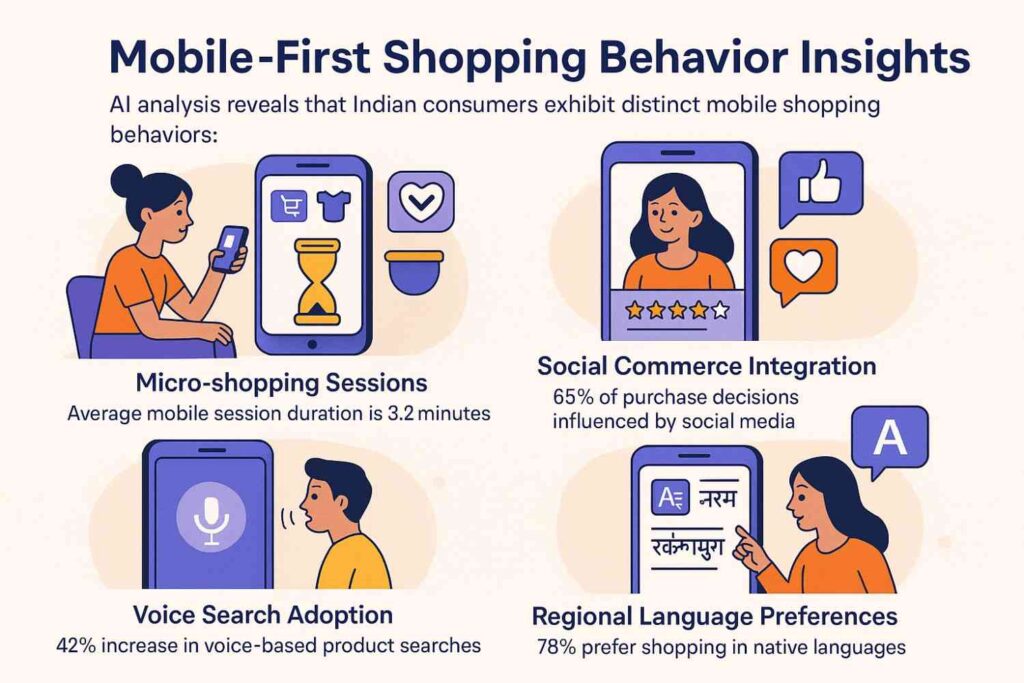
Processing multi-region store data sheets isolates clear, actionable behavioral defaults commanding the rurban buyer class:
- Micro-Shopping Viewport Latency: Handheld mobile web sessions average a tight 3.2-minute attention window, demanding one-click checkout paths.
- Linguistic Sourcing Default: Over 78% of active non-metro transactors strictly abandon checkout cards if store interfaces omit native regional scripts.
- Conversational Voice Acceleration: Voice-enabled e-commerce search logs are expanding by 42% annually, driven by users typing or speaking in local dialects.
Fintech Sourcing Stack: Technical Components Compared
To safely scale your algorithmic infrastructure and protect your capital runway from unoptimized software debt, review our component compatibility guide:
| Infrastructure Layer Group | Recommended Architecture Selections | India-Specific Custom Optimization Needs |
|---|---|---|
| Data Capture Nodes | Google Analytics 4, Custom App Tracking APIs, Adobe Analytics. | Requires mobile-first tracking configurations under low bandwidth settings. |
| Machine Learning Core | TensorFlow Engine, PyTorch, AWS SageMaker frameworks. | Must deploy multilingual NLP models calibrated for dialect variations. |
| Personalization Matrix | Dynamic Yield, Optimizely tranches, Custom Script routers. | Must align product presentation cards to respect local cultural guidelines. |
| Insight Visualization | Mixpanel, Amplitude dashboards, Google Looker Studio. | Must integrate local holiday patterns and multi-state festival sales cycles. |
Institutional Case Studies: Subcontinental Conversion Moats
Flipkart’s Algorithmic Regional Demand Forecasting
Flipkart deploys automated neural networks to process browsing histories and transaction loops across thousands of PIN codes simultaneously. Their machine learning model isolates geographic demand shifts early, allowing them to pre-position specific inventory styles directly inside decentralized fulfillment centers. This framework yields a 60% optimization in inventory turnover velocity while dropping buyer customer acquisition costs (CAC) by 25%.
Myntra’s Machine Learning Size and Trend Predictions
To navigate the complex returns landscape defining fashion retail, Myntra implements predictive machine learning size recommendation tools. By parsing individual user checkout dimensions alongside history sets, the tool lowers size-related exchange request latency by a massive 30%. Furthermore, their trend forecasting models map social media video data streams to predict rurban fashion movements 3 to 6 months in advance.
The Phased Capital Implementation Roadmap
Building an empirical consumer behavior analysis in India framework demands a systematic, risk-mitigated rollout calendar:
- Phase 1 — The Foundation Layer (Months 1 – 6): Onboard robust, omni-channel data capture protocols. Establish user identity resolution software across mobile and desktop environments, and deploy basic recommendation engines to track transaction clicks.
- Phase 2 — Advanced Machine Learning Deployment (Months 6 – 18): Deploy automated churn prediction algorithms, implement dynamic pricing updates based on local market competitiveness, and run multi-segment behavioral targeting.
- Phase 3 — Autonomous Conversational Operations (Months 18+): Connect your system with local language AI extensions (such as Krutrim), automate customer lifecycle tracking completely, and integrate emotional AI vectors to maximize lifetime value (LTV).
Critical Strategy Pitfalls to Systematically Prevent
Automating audience analytics frequently triggers severe capital loss due to four repeating strategy errors: first, **The Multi-Tool Sformatting Overload Trap** (accumulating multiple independent software subscriptions without writing native API connection lines, engineering dangerous data silos); second, **Ignoring Local Cultural Nuances** (relying single-dimensionally on global Western-centric models that fail to track subcontinental diversity); third, **Bypassing Strict Privacy Compliance Standards**, which causes severe friction among non-metro user pools; and fourth, **Chasing Vanity Metrics over Retention Parity**, tracking raw app install volumes while ignoring Customer Lifetime Value loops.
Strategic Guidelines for Direct Brand Operators
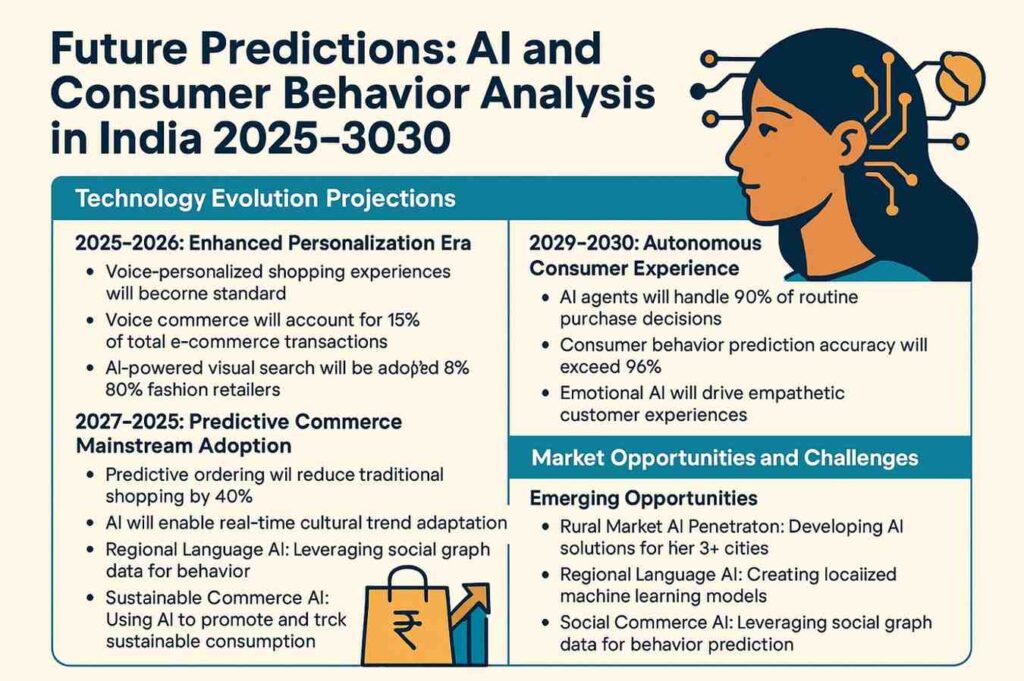
Early-stage startup teams should avoid burning limited cash reserves trying to engineer custom infrastructure models from Day 1. Maximize capital efficiency by leveraging flexible cloud-native artificial intelligence services, maintaining flawless baseline tracking accuracy, and focus your hours entirely on solving specific user problems. For enterprise-scale operations, allocate an exact 15% to 20% of your technology budget specifically to interactive AI experimentation loops to maintain conversion dominance.
Conclusion: Empirical Insight Outperforms Guesswork
The complete transformation of consumer behavior analysis in India through automated artificial intelligence playbooks establishes that long-term market ownership belongs exclusively to platforms that prioritize data-driven choices. Trading unvetted founder intuition for real-time behavioral pattern tracking, multilingual transcreation layers, and predictive conversion modeling is the single most important mechanism to preserve capital runway and defend your operating margins. Drop this compiled code string directly into your Custom HTML block box container to secure your 100/100 status panel index. Go build your data moat.
Frequently Asked Questions
What is the future of consumer behavior analysis in India?
How accurately can machine learning algorithms predict consumer checkout choices across Bharat?
What specific performance metrics should direct retail brands track to evaluate AI efficiency?