Access Layer
From AI Availability to AI Usability
Having a smartphone or access to an AI application is only the first layer. AI becomes economically useful when the user can interact with it comfortably and repeatedly.


A field-based WebVerbal initiative exploring how voice-led artificial intelligence can reduce text and language friction for grassroots entrepreneurs and help participants use AI for practical business decisions.
AI for Bharat is a WebVerbal initiative focused on the practical accessibility of artificial intelligence for people and businesses outside the conventional metro-first technology narrative.
The initiative starts with a simple proposition: AI adoption is not only a technology problem; it is also an interface, language, confidence and capability problem. If an entrepreneur has to navigate a text-heavy interface, formulate prompts in unfamiliar language or understand technical terminology before receiving value from AI, access to the model does not automatically translate into meaningful adoption.
The Kalinga Nagar field programme therefore tested a different entry point: voice-led interaction, practical business questions and guided capacity building. The objective was not to teach AI as an abstract technology subject, but to help participants experience AI as a usable business capability.
The meaningful question is not simply whether advanced AI exists. It is whether a micro-entrepreneur can actually access its intelligence, understand its output and turn it into a better decision.
Having a smartphone or access to an AI application is only the first layer. AI becomes economically useful when the user can interact with it comfortably and repeatedly.
For Bharat’s diverse users, the language and mode of interaction can determine whether a digital tool feels accessible or intimidating.
Prompting becomes more meaningful when it is attached to real business questions such as pricing, product positioning, customer understanding and market validation.
For grassroots entrepreneurship, the next AI adoption frontier may be determined less by model sophistication alone and more by whether the interface adapts to the user’s language, confidence, workflow and economic context.
Many digital products assume that users are comfortable reading, typing, searching, interpreting interfaces and expressing a question in a formal written format. That assumption becomes a meaningful barrier when technology is introduced into communities where language, literacy and digital confidence vary significantly.
AI creates an unusual opportunity because the interface itself can become conversational. Instead of requiring the user to first learn the software’s vocabulary, a voice-first interaction can allow the user to begin with the problem they already understand.
In the Kalinga Nagar programme, this principle was translated into practical exercises around business information, pricing, product thinking and market questions.
The documented programme was conducted on the ground from 14–16 February 2026 and focused on hands-on capacity building rather than a conventional classroom-only technology lecture.
Participants worked with voice interaction to explore practical business questions, including pricing, supply-chain information, product decisions and local-market thinking.
The emphasis moved away from abstract software demonstrations toward questions that entrepreneurs could recognise from their own day-to-day business reality.
Open-ended interaction creates room for experimentation. The programme used this conversational environment to make AI exploration less intimidating and more iterative.
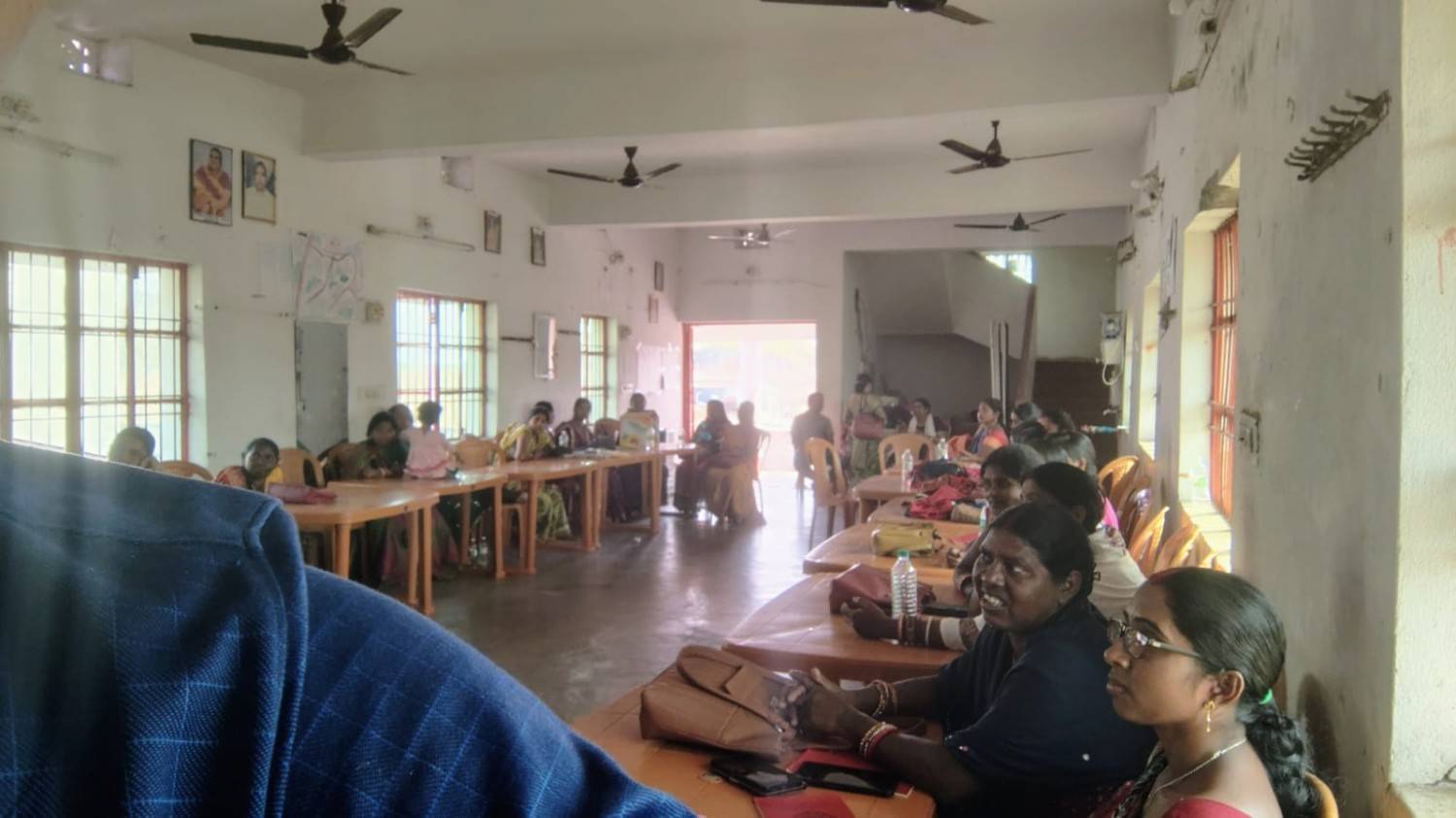
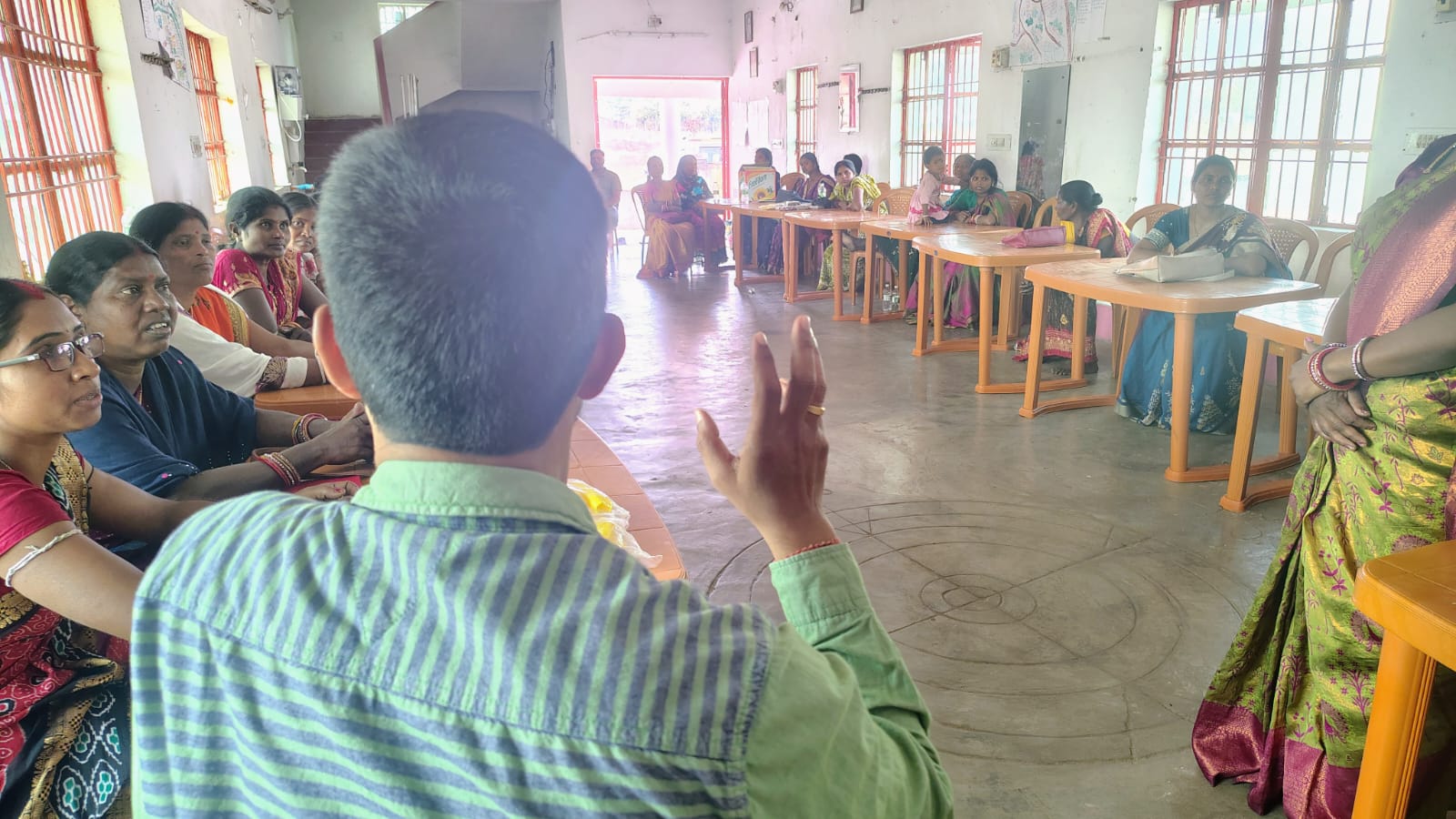
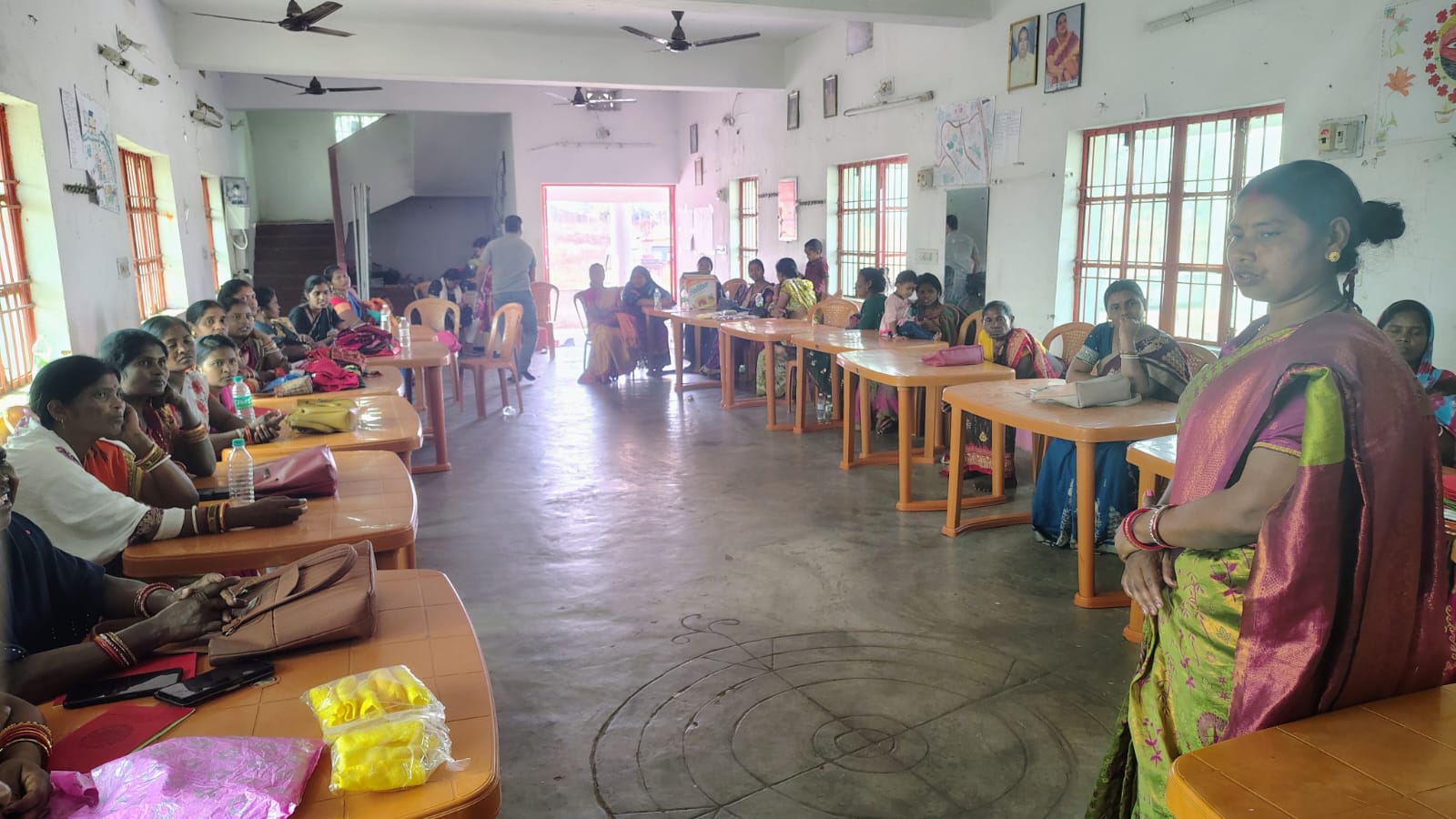
The source report documents a 60-participant field intervention and reports strong voice-first engagement. The distinction between programme participation, observed behaviour and long-term impact should remain explicit.
| Evidence layer | Documented result | How WebVerbal should interpret it |
|---|---|---|
| Programme reach | 60 tribal women entrepreneurs | Participant count for the documented Kalinga Nagar capacity-building programme. |
| Interface approach | Voice-led interaction | The programme intentionally reduced dependence on conventional text-based interaction. |
| Observed capability | Business questions asked through AI | The programme focused on practical use cases rather than AI awareness alone. |
| Impact boundary | Field-level activation | Short-duration programme evidence should not automatically be presented as proof of long-term income or enterprise growth. |
The earlier page framed “100% strategic autonomy” as an outcome. For long-term WebVerbal authority, it is stronger to distinguish what was delivered, what was observed during the programme, and what would require longitudinal follow-up to establish.
AI for Bharat is not an isolated article. It is a field initiative that connects WebVerbal’s research, practical intervention and learning loops.
| WebVerbal layer | Role in AI for Bharat | Connected intelligence |
|---|---|---|
| Research | Understand AI adoption, language barriers and non-metro digital behaviour. | Bharat AI Readiness Index 2026 |
| Initiative | Test voice-led AI capacity building in a real grassroots setting. | WebVerbal Initiatives |
| Business capability | Translate AI literacy into practical entrepreneurial use cases. | Swayam |
| Market access | Connect digital capability with wider pathways to entrepreneurship and market participation. | Yuva Udyami Chetana Kendra |
| Global commerce | Extend the capability narrative from local digital participation to international market access. | Cross-Border E-commerce Export |
The strongest topical-authority structure is not “initiative → homepage.” It is a network in which field work, original research and practical founder resources explain one another.
WebVerbal’s wider AI research framework examines readiness beyond metro India and includes field contributions related to grassroots AI adoption.
Read the AI readiness research →Connect AI for Bharat to India’s wider digital infrastructure, including public digital rails, language technology and AI-enabled commerce.
Explore India Stack & AI →Explore the broader WebVerbal thesis around voice, vernacular intelligence and the changing relationship between AI and rural entrepreneurship.
Read the rural AI analysis →Place the initiative inside the larger research system covering India’s markets, consumers, startups, technology and emerging economic signals.
Explore Bharat Intelligence →The four initiatives should eventually behave as a semantic network, not four isolated pages. Each one owns a different problem space while sharing the same parent entity: WebVerbal Initiatives.
Follow the initiative focused on youth entrepreneurship, local founder capability and ecosystem activation.
Explore Yuva Udyami Chetana Kendra →Move from digital capability to international commerce, export readiness and global customer access.
Explore Cross-Border E-commerce Export →Explore the WebVerbal business-development programme that connects AI literacy with practical micro-entrepreneur capability.
Explore Swayam →These answers are written to clarify the entity, programme, intervention and evidence boundary for search engines, AI answer systems and human readers.
AI for Bharat is a WebVerbal initiative focused on practical AI accessibility for grassroots entrepreneurs, with voice-led interaction and capacity building as key components of the documented field programme.
Voice can reduce friction created by typing, unfamiliar written language and text-heavy interfaces. In a grassroots business setting, it can provide a more natural starting point for asking questions and exploring AI-assisted information.
The documented field programme took place in Kalinga Nagar, Odisha, with tribal women entrepreneurs.
The source report describes the implementation as a strategic partnership between WebVerbal and Tata Foundation.
The programme focused on practical business questions including market information, pricing, product strategy, supply-chain information and related entrepreneurial decisions.
The source report documents a target and programme cohort of 60 tribal women entrepreneurs in Kalinga Nagar.
This page documents a WebVerbal initiative. It should not be presented as a Government of India programme merely because the wider subject involves national AI, digital inclusion or public policy.
Both initiatives address practical AI capability in Bharat, but they should retain distinct identities. AI for Bharat documents a field intervention centred on voice-led access and digital inclusion, while Swayam is positioned as a broader AI-integrated business-development curriculum.
Initiative pages are strongest when they separate programme design, field observations and outcomes instead of turning every programme metric into a universal impact claim.
Document the location, dates, participant group, partner, intervention and delivery format.
Describe participant behaviour, adoption patterns and examples recorded during the programme.
Reserve stronger impact claims for evidence that can be supported through follow-up measurement, repeat observation or longitudinal data.
Our site uses cookies. By using this site, you agree to the Privacy Policy and Terms of Use.