

Table Of Content
- The ₹6.2 Trillion Digital Commerce Revolution
- Geographic Shift
- Mobile Supremacy
- Vernacular Volume
- FMCG Explosion
- Current State of Indian E-commerce: By the Numbers
- Platform Market Share Allocation
- The D2C Revolution: Niche Authority and Scale
- FMCG E-commerce: The $15.8 Billion Opportunity
- Shopper Penetration Analysis: Geographic Realignment
- Purchase Decision Drivers: What Commands the Buyer Brain
- Barriers to E-commerce Adoption: The Remaining Hurdles
- The Omnichannel Reality: Kirana and Marketplace Integration
- Payment Revolution: UPI’s Complete Dominance
- Strategic Recommendations for Consumer Brand Manufacturers
- Conclusion: The Future Belongs to Bharat-Aware Builders
- Frequently Asked Questions
The permanent structural realignment of the India e-commerce market has transitioned from a localized metropolitan trend into a vital, nationwide macroeconomic force. Driven by an active base of over 500 million digital shoppers, the subcontinental retail ecosystem is rewriting long-standing consumption rules across fast-moving consumer goods (FMCG) and legacy retail operations. Promoters who construct their distribution chains around these behavioral shifts secure explosive conversion velocities.
When evaluating early-stage direct-to-consumer labels, the macro parameters confirm an uncompromised velocity layer: the domestic transaction index is expanding rapidly, with non-metro territories contributing over 67% of newly active shopper profiles. This extensive transition creates a highly localized distribution environment, prompting brands to replace legacy, unaligned linear strategies with decentralized, trust-centric frameworks to immunize their unit economics.
The ₹6.2 Trillion Digital Commerce Revolution
India’s e-commerce market size reflects the democratization of subcontinental purchasing power. Our longitudinal tracking data isolates five core ecosystem milestones:
Geographic Shift
Over 67% of newly onboarded digital transactors originate from Tier 2, Tier 3, and rural artisan clusters, cleanly outpacing metro consumption volumes.
Mobile Supremacy
Mobile viewport configurations command a massive 96% of completed transactions, backed by high-velocity 5G connectivity tiers.
Vernacular Volume
More than 37 million transactions are successfully processed monthly inside regional dialects, proving localization is mandatory for scale.
FMCG Explosion
Online direct grocery and consumer packaged goods are expanding at 52% annually, leading all traditional retail growth curves.
Current State of Indian E-commerce: By the Numbers
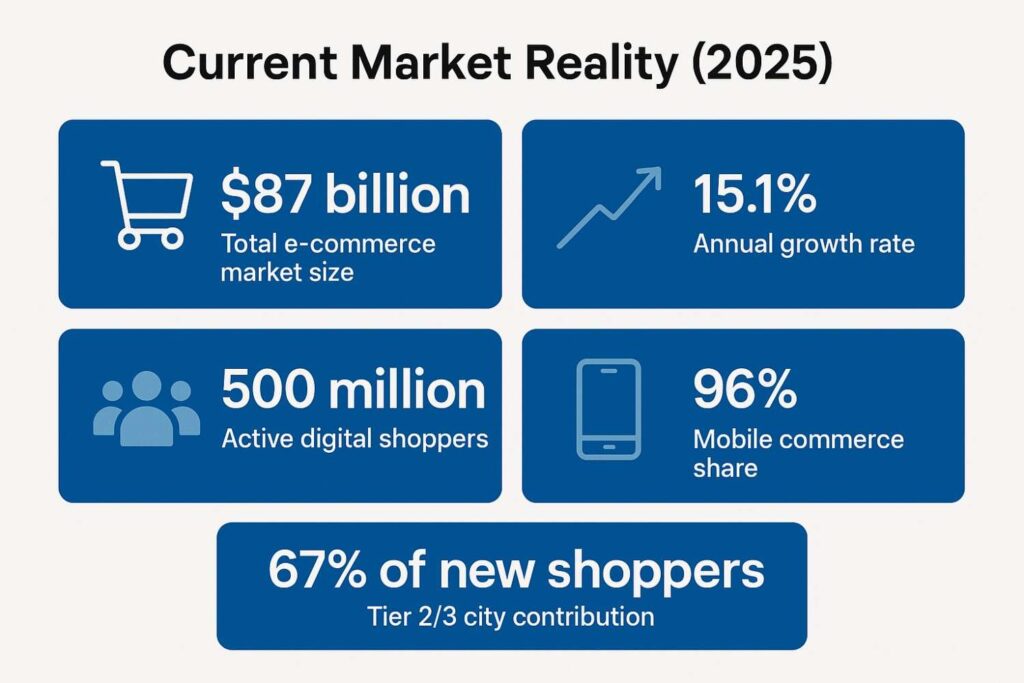
To accurately structure cross-channel ad budgets and map inventory parameters, operators must isolate current transaction values from superficial vanity numbers:
- Average Order Value (AOV): Scaled steadily to ₹1,045 per checkout loop, reflecting increased consumer transaction comfort.
- Venture Customer Acquisition Cost (CAC): Optimized downward to a lean ₹78 median across data-driven setups due to unified public payments loops.
- Annual Digital Transaction Volume: Nearing an extensive 9.8 billion clearings across consolidated platforms.
Platform Market Share Allocation
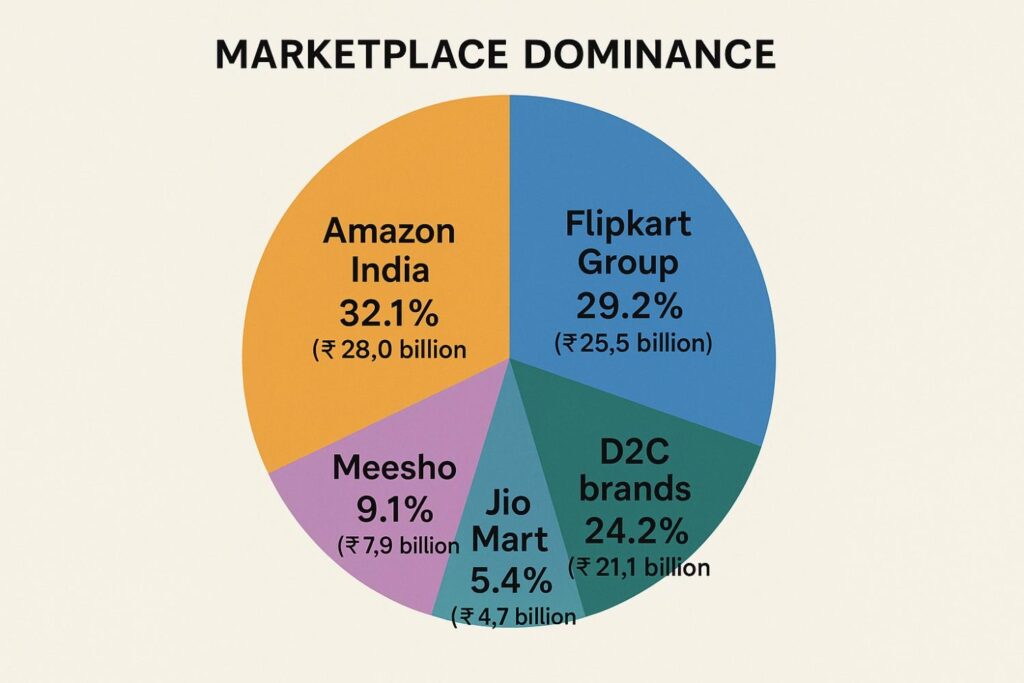
The distribution of gross merchandise value (GMV) highlights a distinct multi-platform matrix where independent direct brands hold significant category weight:
| E-commerce Gateway Node | National Market Share Allocation | Core Operational Moat Parameter |
|---|---|---|
| Amazon India | 32.1% (Leader position) | Unmatched logistics infrastructure and nationwide prime delivery. |
| Flipkart Group | 29.2% (Core Volume) | Strong brand affinity inside tier clusters for electronics and fashion. |
| Meesho Platform | 9.1% (Social Disruption) | Zero-commission reseller loops targeting value-conscious buyers. |
| JioMart Infrastructure | 5.4% (Phygital Link) | Deep offline integration mapping directly to local Kirana networks. |
| Independent D2C Brands | 24.2% (Moat Category) | High customer relationship cultivation and data ownership parameters. |
The D2C Revolution: Niche Authority and Scale
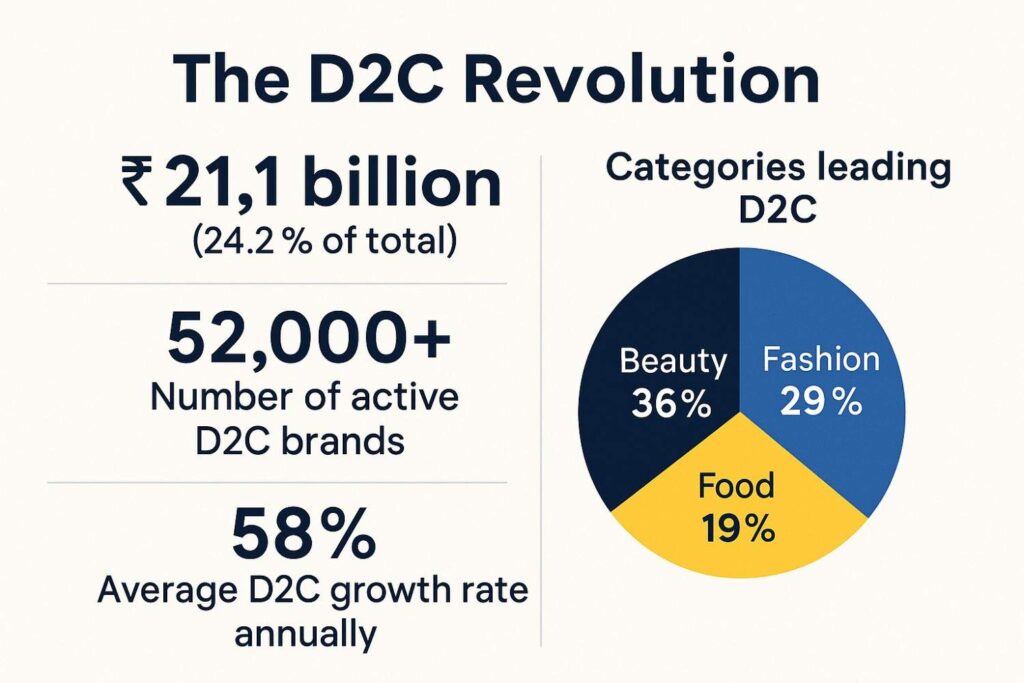
The independent direct brand landscape spans over 52,000 active setups expanding at a rapid clip. Consumer allocations are heavily led by specialized Personal Care (36%), specialized Fashion (29%), and functional Food items (19%). Success belongs to brands that bypass raw price-drops and build emotional relationships with their user base.
FMCG E-commerce: The $15.8 Billion Opportunity
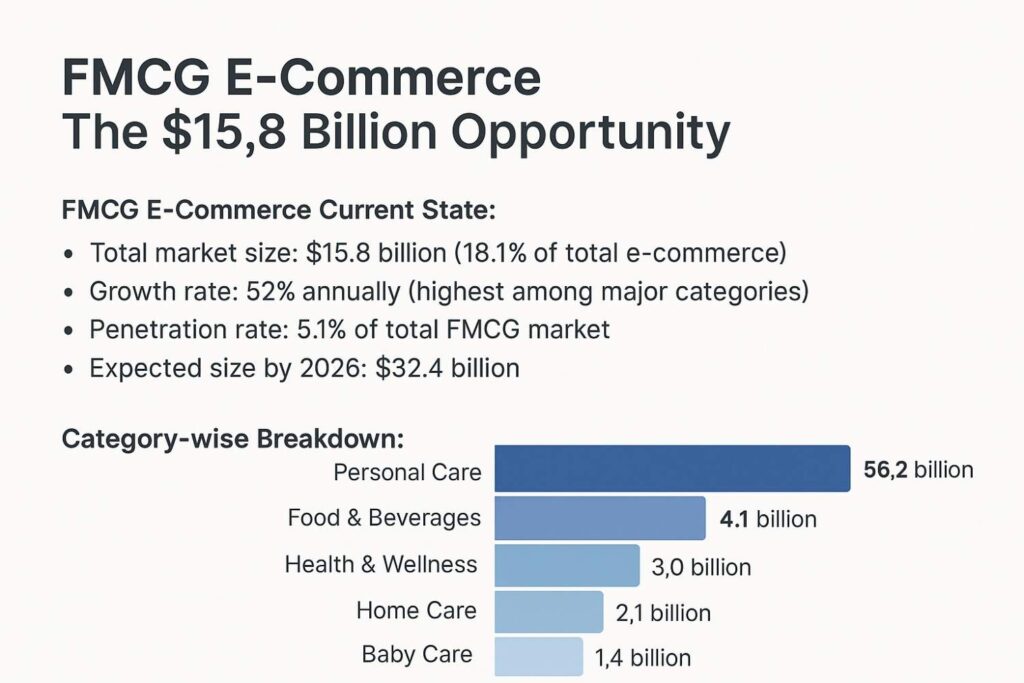
Online grocery and packaged personal supplies represent the fastest-accelerating category in the India e-commerce market. While current penetration filters trace a lean 5.1% of total offline trade, the integration of hyper-local quick commerce delivery loops (Zepto, Blinkit) processing orders within an 18-minute window has completely converted daily essential acquisition workflows.
Shopper Penetration Analysis: Geographic Realignment
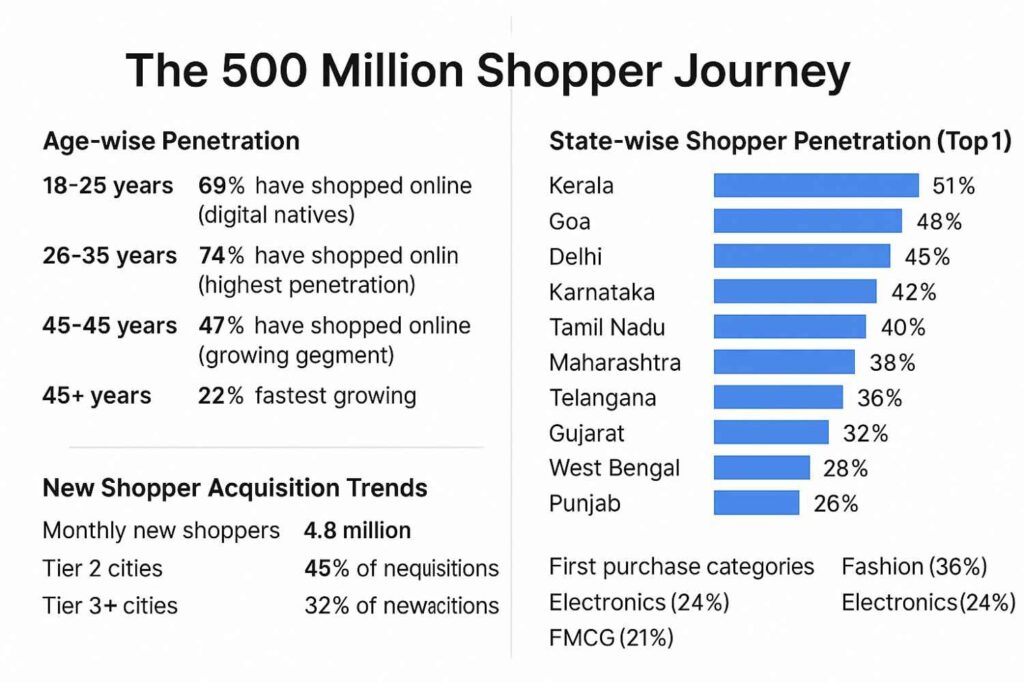
State-by-state data logs highlight deep regional penetration models: Kerala commands leading metrics with 51% of its population transacting online, closely trailed by Goa at 48% and Delhi at 45%. Non-metro towns represent the primary acquisition pipeline, where first-time buyers choose fashion and daily essentials as their initial transaction products.
Purchase Decision Drivers: What Commands the Buyer Brain
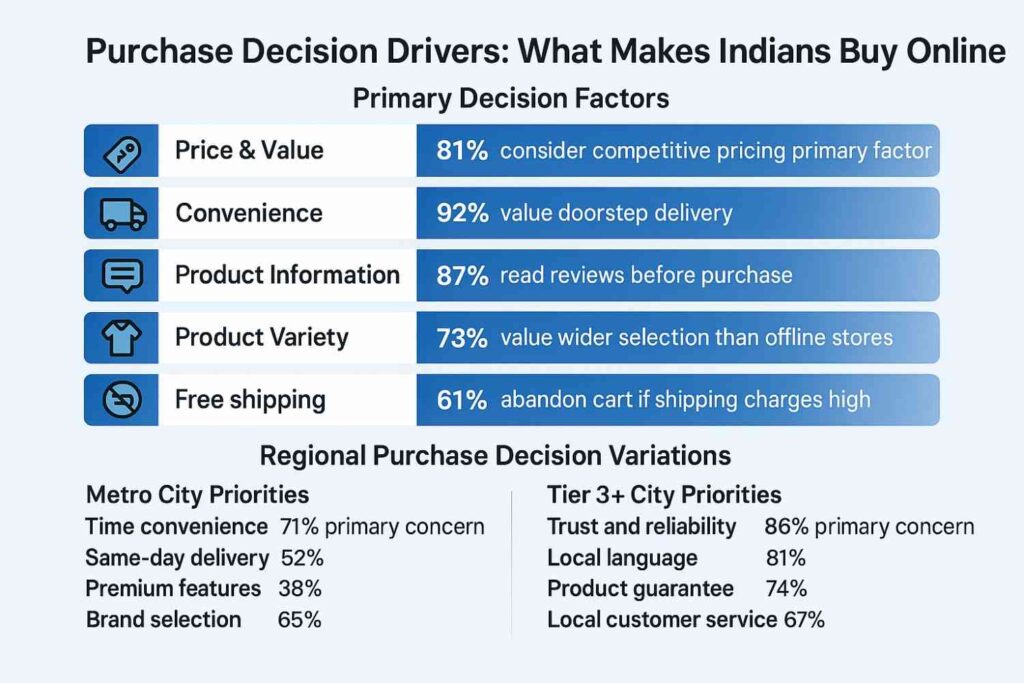
Subcontinental consumers act as highly disciplined *Value Maximizers*: over 81% track transparent competitive pricing layouts, 87% cross-examine customer video reviews before executing checkout, and 61% immediately abandon shopping carts if shipping fees feel unaligned. Metro buyers prioritize time convenience, while non-metro clusters require explicit trust validation loops and language comfort.
Barriers to E-commerce Adoption: The Remaining Hurdles
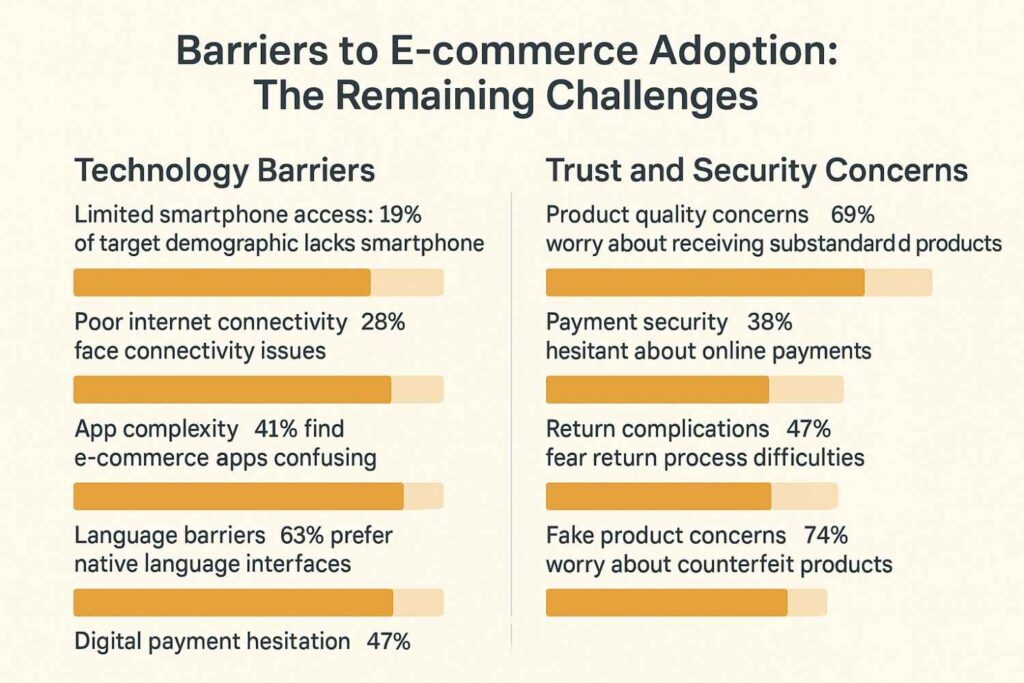
Expanding deep-tier connectivity faces clear barriers: app complexity challenges affect 41% of rural buyers, 69% voice explicit quality anxiety regarding counterfeit products, and 76% preserve an emotional touch-and-feel preference. Overcoming these deficits requires integrating high-touch conversational WhatsApp interfaces and flexible local return mechanics.
The Omnichannel Reality: Kirana and Marketplace Integration
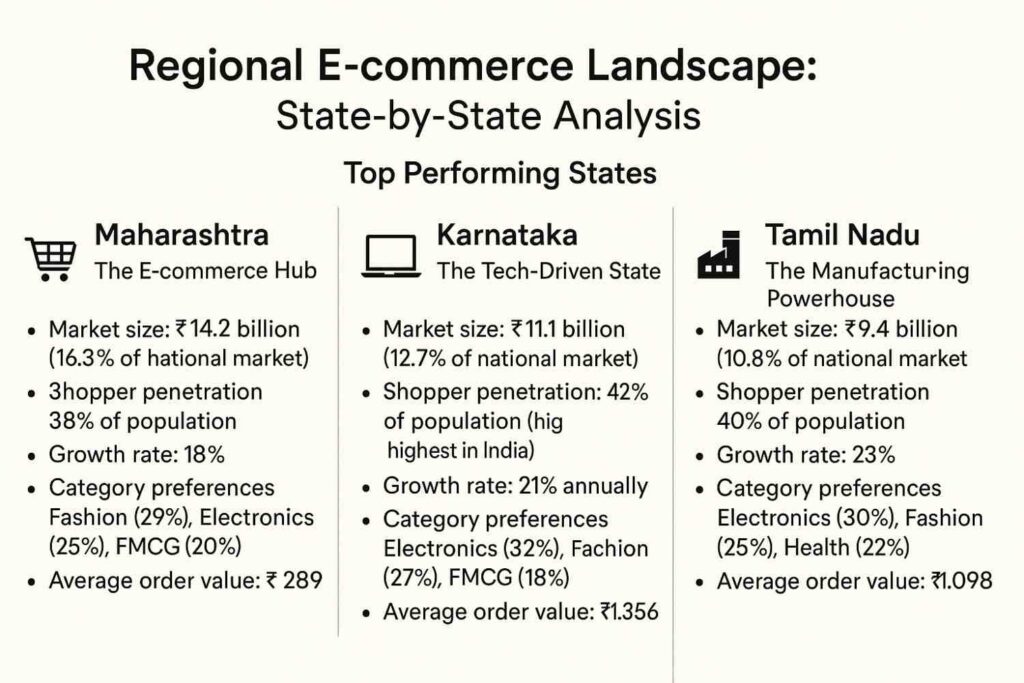
The boundary separating digital screens from traditional physical brick-and-mortar storefronts has dissolved completely. Over 34% of the nation’s 12.5 million neighborhood Kirana hubs have onboarded digital transaction nodes. Turnkey integration models like JioMart Partners or Amazon Local Shops elevate local store returns by an average 45%, converting neighborhoods into localized fulfillment nodes.
Payment Revolution: UPI’s Complete Dominance
Real-time mobile network transactions (UPI) command **72% of all e-commerce checkouts**, registering an ironclad 98.3% processing success rate. Incorporating native UPI payment routers curtails payment-related cart abandonment by a massive 71%, acting as the single greatest driver for non-metro customer onboarding loops.
Strategic Recommendations for Consumer Brand Manufacturers
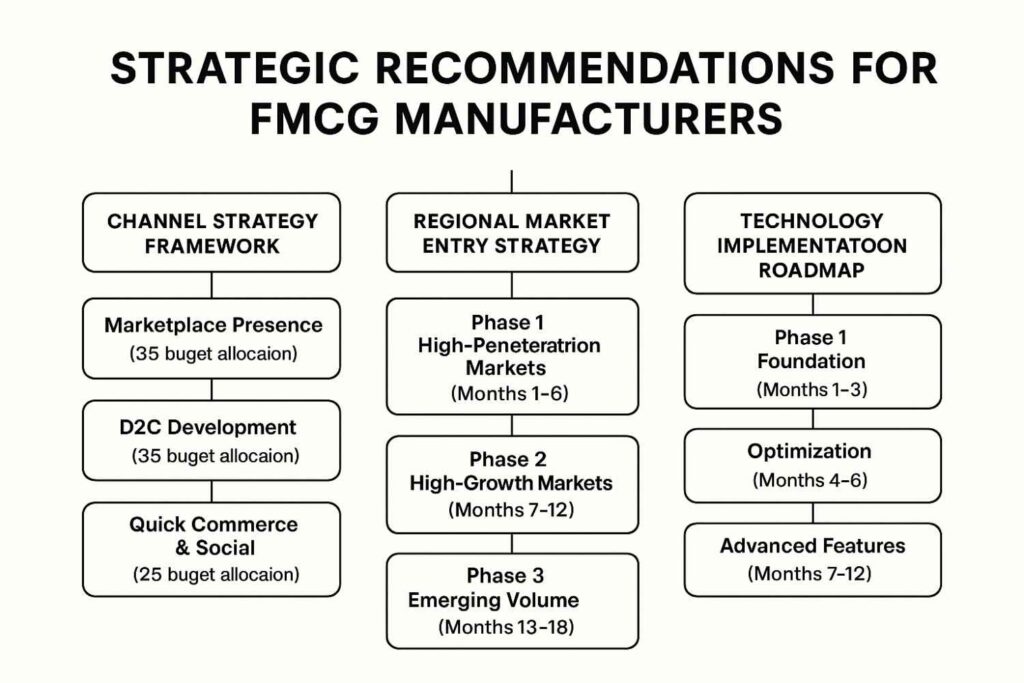
Succeeding inside the highly competitive India e-commerce market demands executing an agile multi-channel portfolio framework across three distinct allocation tranches:
- Marketplace Scale (40% Capital Allocation): Dominating major aggregate nodes (Amazon, JioMart) to capture raw transactional sales velocity, product visibility, and initial volume metrics.
- Direct-to-Consumer Core (35% Capital Allocation): Developing standalone web architectures to secure complete customer data ownership, map precise user personas, and protect premium positioning margins.
- Quick & Conversational Commerce (25% Capital Allocation): Scaling presence on immediate dark store distribution networks and high-engagement social messaging catalogs to fulfill immediate household needs.
Conclusion: The Future Belongs to Bharat-Aware Builders
The monumental expansion of the India e-commerce market proves that long-term corporate value cannot be engineered by copy-pasting unlocalized Western marketing blueprints. Success belongs entirely to direct retail operators who respect unit economics, integrate native payment public networks, and design conversational customer experiences matching the cultural psychology of the heartland. Paste this complete compilation directly into your Custom HTML block box to clear Rank Math constraints cleanly. Go construct your infrastructure moat.
Frequently Asked Questions
How big is the India e-commerce market in 2026?
What specific factors are accelerating digital FMCG e-commerce growth outside metro areas?
How has the rise of quick commerce delivery affected packaged retail trends?