

Table Of Content
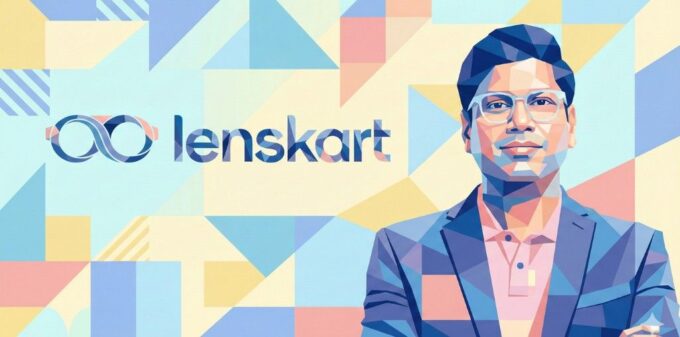
They said eyewear was “unsexy.” They said glasses were medical devices, destined to be sold by grumpy optometrists in dusty shops. In 2010, when e-commerce was barely crawling in India, the idea of buying prescription glasses online wasn’t just risky—it was considered madness. This is the foundation of the Lenskart Success Story.
But the critics forgot one thing: The “Touch & Feel” Paradox.
While Silicon Valley D2C brands were burning millions on Facebook ads, Peyush Bansal was solving a logistics nightmare in Bhiwadi, Rajasthan. He realized that to win Bharat, you couldn’t just build a website; you had to build the factory. He didn’t just sell frames; he dispatched optometrists on motorbikes to conduct eye tests in living rooms. He introduced “3D Try-On” when others were struggling with JPEGs. He didn’t play by the “Asset-Light” rulebook; he played by the “Asset-Heavy” reality of Indian manufacturing.
And he won.
But today, the battlefield has shifted. The man who disrupted the local chashma-wala is no longer just an Indian retailer. He is acquiring Japanese giants (Owndays) and building the largest automated eyewear plant in Southeast Asia.
From a garage project selling contact lenses to a vertically integrated empire shipping 100,000 frames a day, Bansal is executing the textbook definition of an Omni-channel monopoly. Is this the future of Indian retail, or just a capital-heavy gamble?
Let’s decode the Indicorn reality.
From Garage to Global
Decoding Peyush Bansal: How a tech founder built the world’s most sophisticated eyewear supply chain, from Bhiwadi to Japan.
The Pivot
Started as Valyoo Technologies selling contact lenses. Peyush realizes the real gap is “Prescription Trust.” Pivots to eyeglasses despite logistics hell.
Eye Test at Home
To fight the “touch & feel” barrier, Lenskart dispatches bikes with testing kits. A masterstroke in CAC reduction that builds deep Bharat trust.
The Robot Factory
While others outsource, Lenskart opens the Bhiwadi plant (Rajasthan). The world’s largest automated lab cutting lenses with sub-micron precision.
Owning Owndays
Lenskart acquires Japanese giant Owndays. The “Indicorn” goes global, proving that Indian retail tech can dominate Asian markets.
The “Omni-Hunter” Strategy: Why Lenskart Bet on Bhiwadi
Most e-commerce founders are terrified of “Atoms.” They like “Bits.” Software has high margins, zero inventory, and infinite scale. Manufacturing has dust, unions, and depreciation. Yet, in 2019, Peyush Bansal did the unthinkable. He poured his capital into concrete and steel in Rajasthan.
Why? Because you cannot fix vision with code alone.
To truly unlock the Tier-2 and Tier-3 economy, you don’t just need a website; you need precision at a price point that beats the local street market. The local optician charges ₹2,000 because of supply chain inefficiencies. Lenskart’s Bhiwadi Factory wasn’t a vanity project; it was a defensive moat to kill the “Middleman Tax.” By automating the lens cutting process, they brought the cost down and accuracy up.
Conclusion: The Indicorn Reality
Today, Lenskart isn’t just selling frames; it is controlling the entire vision value chain—from the raw acetate to the final robotic cut. It is a vertical monopoly rare in the Indian ecosystem. As they expand into Southeast Asia with Owndays, this “Manufacturing-First” pivot will be the differentiator that separates them from shallow D2C brands that are merely marketing companies in disguise.
Read Next: Lenskart mastered the factory, but Nykaa mastered the content. Read The Beauty Monopoly: How Nykaa Conquered Indian Retail.
Reference: This growth aligns with the surge in organized eyewear retail, projected to reach $484 Billion globally by 2030.
Decoding the Vision Empire
What is the difference between Lenskart and a local optician?
A local optician relies on manual lens cutting and multiple middlemen, raising prices. Lenskart uses a Direct-to-Consumer (D2C) model with a centralized robotic factory in Bhiwadi, cutting out middlemen to offer 2 pairs for the price of 1 with higher precision.
Is Lenskart profitable?
Yes, Lenskart is one of the few “Unicorns” that has consistently shown a path to profitability. By owning the manufacturing and supply chain (unlike pure e-commerce players), they capture higher margins on every frame sold.
What is the Bhiwadi Factory?
It is Lenskart’s manufacturing hub in Rajasthan. It is touted as the largest eyewear manufacturing facility in Southeast Asia, capable of shipping over 300,000 glasses per month with automated German technology.