

Table Of Content
They said the cab war was over. They said Uber had deeper pockets, better technology, and infinite patience. In 2015, Silicon Valley pundits wrote Ola’s obituary before the ink was dry on their Series E term sheet. This is the beginning of the Ola Electric Success Story.
But they forgot one thing: The “Bandipora” Factor.
While Uber was trying to copy-paste its San Francisco playbook into Mumbai, Bhavish Aggarwal was obsessing over the chaos of Indian roads. He didn’t just build an app; he built a survival mechanism for the Indian commuter. He introduced cash payments when the world demanded credit cards. He launched auto-rickshaws when the elites wanted sedans. He didn’t play by the Valley’s rules; he played by Bharat’s.
And he won.
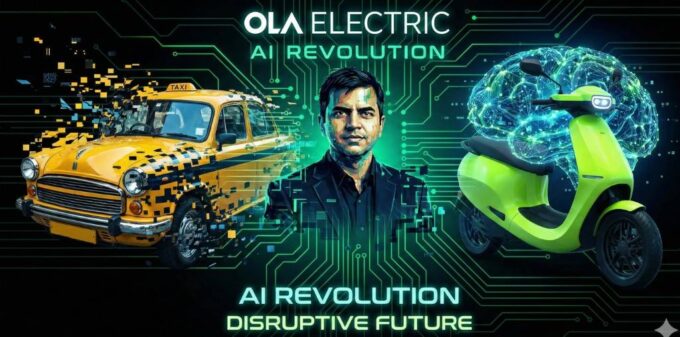
But today, the battlefield has shifted. The man who defeated Uber is no longer interested in just moving people from Point A to Point B. He wants to control the energy that moves them and the intelligence that guides them.
From a 500-acre “FutureFactory” in Tamil Nadu run entirely by women to “Krutrim,” India’s first AI unicorn, Aggarwal is attempting the most aggressive pivot in Indian startup history. Is this the rise of a new industrial titan, or is Ola stretching itself too thin?
Let’s decode the Indicorn reality.
From Cab King to AI & Energy
Decoding Bhavish Aggarwal: The most aggressive pivot in Indian startup history, from ride-hailing wars to building the world’s largest EV factory.
The Bandipora Trip
Bhavish Aggarwal, a Microsoft researcher, rents a car for a trip to Bandipora. The driver abandons him mid-way over a price negotiation. Stranded, he decides to fix the “Trust Deficit” in Indian transport.
Defeating Uber
Uber enters India with deep pockets. Everyone predicts Ola’s death. Bhavish launches “Ola Auto” and accepts cash payments—features Uber ignored. By understanding Bharat’s chaos, Ola holds its ground.
The FutureFactory
Bhavish shocks the world. He stops focusing just on software and decides to build hardware. Ola Electric announces the “FutureFactory” in Tamil Nadu—the world’s largest 2W factory run entirely by women.
Krutrim AI
Not stopping at EVs, Bhavish launches “Krutrim”—India’s first AI unicorn. He declares “Data Sovereignty,” arguing India shouldn’t rely on Western AI. Ola moves its entire workload from AWS/Azure to its own cloud.
The “Zidd” Strategy: Why Ola Bet Everything on Manufacturing
Most software founders are terrified of “Atoms.” They like “Bits.” Software has high margins, zero inventory, and infinite scale. Manufacturing has supply chains, unions, and rust. Yet, in 2021, Bhavish Aggarwal did the unthinkable. He poured his software capital into concrete and steel.
Why? Because Software alone cannot fix India.
To truly unlock the Tier-2 and Tier-3 economy, you don’t just need an app; you need a vehicle cheap enough to run. The “Petrol Economy” was eating into driver earnings. Ola Electric wasn’t a vanity project; it was a defensive moat to kill the fuel cost for his ride-hailing army. By building the S1 Pro, he wasn’t just competing with Bajaj; he was trying to delete the biggest line item in a driver’s P&L: Petrol.
Conclusion: The Indicorn Reality
Today, Bhavish Aggarwal wants to control the energy that moves India and the intelligence (Krutrim AI) that guides it. It is a vertical monopoly rare in the Indian ecosystem. As they expand, this Krutrim AI pivot will likely be the differentiator that separates them from legacy auto players.
Read Next: Bhavish fought the petrol economy, but Deepinder Goyal fought the “Profitability” paradox. Read [The Hunger for Reinvention: How Zomato Survived the Burn to Build an Empire].
Reference: This growth aligns with the Government of India’s push for sustainable mobility under the National Electric Mobility Mission Plan (Government of India).
Decoding the Aggarwal Empire
What is the difference between Ola Cabs and Ola Electric?
They are two separate entities. Ola Cabs (ANI Technologies) is the ride-hailing software platform competing with Uber. Ola Electric is a separate manufacturing company that builds scooters and batteries at the “FutureFactory” in Tamil Nadu. Ola Electric listed on the stock market separately in 2024.
What is Krutrim AI?
Krutrim (meaning “Artificial” in Sanskrit) is Bhavish Aggarwal’s third venture. It is India’s first AI unicorn, valued at $1 Billion. Unlike ChatGPT which is trained on western data, Krutrim is a Large Language Model (LLM) built specifically on Indic languages and Indian cultural context.
How did Ola beat Uber in India?
While Uber stuck to a global template (Credit Cards + Sedans), Ola localized aggressively. They introduced Ola Auto (crucial for Indian roads) and accepted Cash Payments years before Uber did. This “Bharat-first” strategy allowed them to capture Tier-2 and Tier-3 markets early.
भावेश अग्रवाल की ‘ज़िद’:
जब उबर (Uber) भारत आया, तो सबने कहा ओला खत्म हो जाएगा। लेकिन भावेश ने हार नहीं मानी।
- 🔥 साहस: विदेशी कंपनियों की नक़ल करने के बजाय, उन्होंने भारत की जरूरतों (Ola Auto, Cash) को समझा।
- 🏭 निर्माण: सिर्फ सॉफ्टवेयर नहीं, उन्होंने दुनिया की सबसे बड़ी EV फैक्ट्री भारत में बनाई।
- 🤖 भविष्य: अब वो ‘Krutrim’ के साथ AI में भारत की अपनी पहचान बना रहे हैं।
ଓଲା ଏବଂ ଭବିଷ୍ୟ ଅଗ୍ରୱାଲଙ୍କ କାହାଣୀ:
ଏହା କେବଳ ଏକ ଟ୍ୟାକ୍ସି ଆପ୍ ନୁହେଁ। ଏହା ହେଉଛି ଭାରତର ନିଜସ୍ୱ ଟେକ୍ନୋଲୋଜିର ଶକ୍ତି।
- 🔥 ସାହସ: Uber ଭଳି ବଡ ବିଦେଶୀ କମ୍ପାନୀ ସହ ଲଢି ଓଲା ନିଜ ସ୍ଥାନ ବଜାୟ ରଖିଲା।
- 🏭 ଉତ୍ପାଦନ: ସେ କେବଳ ସଫ୍ଟୱେୟାରରେ ସୀମିତ ରହିଲେ ନାହିଁ, ବରଂ ଇଲେକ୍ଟ୍ରିକ୍ ଗାଡି ତିଆରି କଲେ।
- 🤖 ଭବିଷ୍ୟତ: ବର୍ତ୍ତମାନ Krutrim AI ମାଧ୍ୟମରେ ସେ ଭାରତୀୟ ଭାଷା ପାଇଁ କାମ କରୁଛନ୍ତି।
ஓலாவின் புரட்சி:
பாவிஷ் அகர்வால் மென்பொருளை (Software) தாண்டி உற்பத்தியில் (Manufacturing) இறங்கினார்.
- 🔥 பெண்கள் சக்தி: தமிழ்நாட்டில் உலகின் மிகப்பெரிய இருசக்கர வாகன தொழிற்சாலையை அமைத்து, அதை முழுவதுமாக பெண்களே நடத்தும் படி செய்தார்.
- 🏭 போட்டி: உபேர் (Uber) போன்ற வெளிநாட்டு நிறுவனங்களை எதிர்த்து நின்று வென்றார்.
- 🤖 எதிர்காலம்: இப்போது AI துறையிலும் இந்தியாவின் கொடியை நாட்டுகிறார்.