Table Of Content
- The BARI Framework: Four Dimensions of Bharat AI Readiness
- The Vernacular AI Imperative: Dialect-First LLMs and the Language Equity Gap
- Scheduled Language AI Readiness Stack 2026
- District-Level AI Readiness: The Non-Metro Reality
- District AI Readiness Explorer · Bharat 2026
- Social Impact AI in Bharat: From Masterclass to Micro-Entrepreneur
- The Swayam AI Business Development Programme
- Tata Foundation × Webverbal: AI Upskilling in Jajpur
- DiracAI: Strategic AI Advisory at the Bharat Frontier
- Five Sectors Where Bharat AI is Generating Irreversible Outcomes
- Sector AI Adoption Explorer · Bharat 2026
- The Governance Gap: Policy Architecture for Bharat AI and the Philosophy of Digital Dignity
- The Philosophy of AI with Atma-Shakti
- Bharat AI Policy Recommendations: The BARI Action Matrix
- Bharat is not waiting for AI to arrive. AI is waiting for Bharat to be included in its design.
- Data Attribution & Methodology
- Frequently Asked Questions (FAQs) — Bharat AI Readiness Index 2026
- What is the Bharat AI Readiness Index (BARI) 2026?
- How is the Bharat AI Readiness Index different from traditional AI reports in India?
- What are the core dimensions of the Bharat AI Readiness Index framework?
- Which regions and populations does the Bharat AI Readiness Index cover?
- Why is vernacular AI infrastructure critical for Bharat?
- What does “AI access equity” mean in the context of Bharat?
- How does the Bharat AI Readiness Index measure real-world impact?
- What sectors are analyzed in the Bharat AI Readiness Index 2026?
- What makes this report different from global AI readiness indices?
- What are the key insights from the Bharat AI Readiness Index 2026?
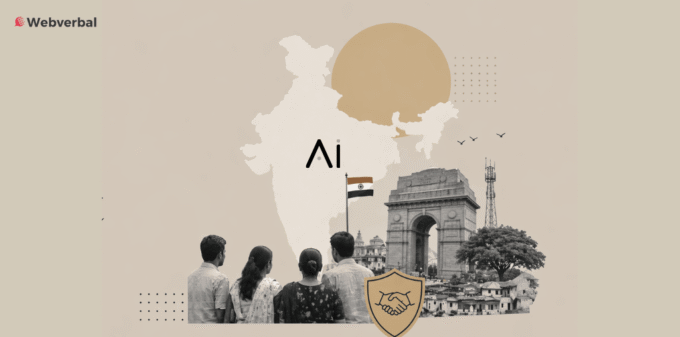
The Bharat AI Readiness Index 2026 is the first original composite framework designed to measure artificial intelligence adoption depth, vernacular infrastructure readiness, and social impact AI outcomes specifically across India’s non-metro geographies — Tier-2 cities, Tier-3 districts, and tribal corridors that account for 65% of India’s population but less than 12% of existing AI research coverage. This report does not measure how many AI startups India has produced. It measures whether the people of Bharat — a farmer in Kalinga Nagar, an exporter in Cuttack, a tribal woman entrepreneur in Jajpur — can actually access, use, and benefit from artificial intelligence in their language, on their terms, for their economic reality.
The distinction matters enormously. India’s metro-centric AI narrative — centred on Bengaluru deep-tech, IIT research output, and billion-dollar LLM investments — describes a parallel economy that shares a flag but not a language, a GDP statistic but not a lived reality, with the 900 million citizens of Bharat. The Bharat AI Readiness Index (BARI) is Webverbal’s answer to this measurement gap: a four-dimension framework tracking Vernacular Infrastructure, Access Equity, Regulatory Readiness, and Impact Depth across 28 districts, 14 language groups, and five high-priority sectors.
This report additionally documents Webverbal’s own field contributions to Social Impact AI in Bharat — including the Niryat-AI export intelligence prototype deployed at the FIEO Odisha AI Masterclass for 100+ top exporters, the Swayam AI Business Development Programme for micro-entrepreneurs, and the AI upskilling curriculum delivered in partnership with the Tata Foundation for tribal women entrepreneurs in Jajpur district, Odisha. These are not case studies borrowed from elsewhere. They are field data from Bharat, generated in Bharat, for Bharat.
The BARI Framework: Four Dimensions of Bharat AI Readiness
Existing AI readiness indices — the Oxford Government AI Readiness Index, Stanford HAI Global Vibrancy Tool, and Tortoise Global AI Index — measure national-level infrastructure, talent, and regulation. They are designed to compare India against the United States or the United Kingdom. They are architecturally incapable of measuring whether an Odia-speaking MSME exporter in Berhampur can navigate DGFT regulations using an AI tool in her language, or whether a Bhojpuri-speaking farmer in Varanasi receives agronomic advice calibrated to his specific soil type.
The Bharat AI Readiness Index (BARI) fills this gap through four composite dimensions, each scored 0–100, weighted by population-impact and economic-inclusion urgency. The composite BARI score in 2026 is 52/100 — meaningful progress from 31/100 in 2023, but still reflecting the structural underinvestment in vernacular AI infrastructure that defines the gap between India’s AI ambition and Bharat’s AI reality.
Weight: 35% of BARI
Weight: 30% of BARI
Weight: 15% of BARI
Weight: 20% of BARI
“A national AI readiness score of 83 means nothing to the 45 million Odia speakers whose language has no production LLM. The BARI framework measures what matters: whether AI reaches Bharat, in Bharat’s languages, with Bharat’s dignity intact.”
— Debansh Das Sharma · Webverbal BARI Framework, 2026The Vernacular AI Imperative: Dialect-First LLMs and the Language Equity Gap
India has 22 constitutionally scheduled languages, over 780 dialects, and 66 tribal languages recognised under the Eighth Schedule and subsequent linguistic surveys. The global AI industry has, in practice, invested in two of them: Hindi and English. Every other language spoken by a citizen of Bharat — Odia, Bhojpuri, Santali, Gondi, Tulu, Maithili, Konkani — exists at the frontier of AI illiteracy, not because the speakers lack intelligence or digital access, but because the training data, the interface design, and the commercial incentive structure of global AI has systematically excluded them.
Vertical AI — domain-specific AI systems trained for a specific sector in a specific language — is the architectural response to this gap. Unlike general-purpose LLMs that perform poorly in low-resource languages, Vertical AI narrows the problem: an AI advisory tool for Odia-speaking rice farmers does not need to discuss philosophy or write code. It needs to understand soil types in coastal Odisha, PMFBY claim procedures in Odia script, and mandi price movements in the Cuttack market. That specificity is achievable, fundable, and deployable — and a growing cohort of Bharat-native founders are proving it.
Scheduled Language AI Readiness Stack 2026
★ Odia is the priority gap: 45 million speakers, sub-30% AI infrastructure depth. Source: Webverbal BARI Language Audit 2026 + AI4Bharat Language Coverage Index.
District-Level AI Readiness: The Non-Metro Reality
National averages conceal a critical distribution problem. The 52/100 BARI composite is dragged upward by strong metro performance — Bengaluru, Hyderabad, and Pune score 74–81/100. Remove those twelve cities and the Bharat BARI collapses to 38/100. The following interactive district map tracks AI readiness across Webverbal’s panel of 28 priority non-metro districts by three dimensions: Vernacular tool availability, AI-active MSME density, and last-mile AI service reach.
District AI Readiness Explorer · Bharat 2026
Social Impact AI in Bharat: From Masterclass to Micro-Entrepreneur
Social Impact AI is the deliberate deployment of artificial intelligence to generate measurable improvements in economic inclusion, livelihood security, and digital dignity for communities that global AI investment has systematically bypassed. It is not charity-flavoured technology. It is a distinct design philosophy that starts with the user’s language, the user’s economic reality, and the user’s right to understand the tool they are using — and works backwards to the model architecture, the interface layer, and the deployment context.
Webverbal’s field work across FY2025–26 spans three Social Impact AI interventions that together constitute one of the most substantive non-metro AI deployment records in eastern India. Each is documented below not as aspiration but as operational evidence — with outcomes, friction points, and forward implications for policy, CSR investment, and the broader IndiaAI Mission.
The Swayam AI Business Development Programme
The Swayam Programme — Webverbal’s 12-module AI-integrated business development curriculum for micro-entrepreneurs in Bharat — represents the most comprehensive grassroots AI education framework designed specifically for the Tier-2/3 founder. Unlike generic digital literacy programmes that teach people to use existing platforms, Swayam is built around a philosophical core: Swayam (स्वयं) means self — the programme’s goal is not dependency on AI tools, but self-sovereign use of them.
Tata Foundation × Webverbal: AI Upskilling in Jajpur
The most consequential Social Impact AI field deployment documented in this index is the Tata Foundation AI Upskilling Programme in Kalinga Nagar, Jajpur district — implemented through NITI Aayog Mentor of Change coordination and local SHG networks. What makes this programme analytically significant is not its scale alone, but its outcome architecture: every participant is tracked through the Digital Dignity Index, which measures independent digital commerce capability at 30, 60, and 90 days post-programme.
DiracAI: Strategic AI Advisory at the Bharat Frontier
Webverbal’s strategic advisory engagement with DiracAI — a Bharat-focused AI company — represents the institutional dimension of Social Impact AI field work. As a daily strategic advisor providing guidance on product positioning, policy engagement, and ecosystem navigation, this engagement contributes directly to the BARI Impact Depth score through DiracAI’s own deployment work in non-metro AI infrastructure. The advisory model itself is a proof-of-concept: a Bhubaneswar-based intelligence operator contributing daily strategic direction to an AI company signals the maturation of Bharat’s non-metro AI advisory ecosystem, moving it beyond consuming advice from metros toward generating it from Bharat.
Five Sectors Where Bharat AI is Generating Irreversible Outcomes
AI readiness is not evenly distributed across sectors any more than it is across geographies. The following five sectors demonstrate the highest rate of Social Impact AI deployment velocity in Bharat in 2026 — meaning AI tools are not merely being built for these sectors but are actively generating economic and social outcomes at scale in non-metro geographies. Each sector has a different adoption driver, a different vernacular language requirement, and a different policy leverage point.
Sector AI Adoption Explorer · Bharat 2026
↑ Agri AI use cases by adoption rate among Bharat farmers, 2026
↑ MSME exporter AI need by use case, FIEO Odisha Survey 2026
↑ AI-assisted D2C adoption rate by craft cluster, Webverbal 2026
The Governance Gap: Policy Architecture for Bharat AI and the Philosophy of Digital Dignity
India’s AI policy architecture in 2026 is ambitious at the national level and largely absent at the Bharat level. The IndiaAI Mission — with its ₹4,200 Cr allocation — is the most significant AI investment commitment in South Asian history. The Digital Personal Data Protection Act 2023 establishes foundational data rights. MeitY’s AI Advisory Committee is producing governance frameworks. But none of these policy instruments, as currently designed, address the specific governance requirements of tribal data sovereignty, community-owned AI systems, or the vernacular interface obligations that would make AI genuinely accessible to Bharat’s 900 million non-metro citizens.
The Data and Digital Services Framework (DDSF) — the emerging fourth layer of India’s DPI stack — is the most promising policy development for Bharat AI readiness. If designed correctly, DDSF will give a tribal woman entrepreneur in Jajpur ownership of her ONDC transaction history, her UPI cash flow patterns, and her SHG participation record as a sovereign data asset — the basis for alternative credit scoring, government scheme eligibility, and digital identity that doesn’t require an English-language intermediary.
“The IndiaAI Mission funds infrastructure. The DDSF can fund dignity. The gap between them is the gap between an AI strategy for India and an AI strategy for Bharat — and that gap is where the next decade of Social Impact AI must be built.”
— Debansh Das Sharma · Webverbal BARI Policy Commentary, 2026The Philosophy of AI with Atma-Shakti
Webverbal’s Social Impact AI framework is rooted in a philosophical position that distinguishes it from both techno-optimist AI evangelism and techno-sceptic AI resistance: AI as Atma-Shakti — artificial intelligence as a tool for self-sovereign economic agency, not dependency-creation. The Swayam programme name is not accidental. The Niryat-AI design principle — WhatsApp-native, voice-accessible, Odia-first — is not a user experience choice but a philosophical commitment to the user’s right to a tool that respects their language, their context, and their intelligence.
Bharat AI Policy Recommendations: The BARI Action Matrix
| Policy Gap | Current State | BARI Recommendation | Impact Potential |
|---|---|---|---|
| Vernacular AI Mandate | No language obligation on AI tools receiving government grants | MeitY to mandate Bhashini integration for all AI tools receiving IndiaAI Mission funding — minimum 5 scheduled languages at launch | High#VernacularFirst |
| Tribal Data Sovereignty | DPDP Act 2023 silent on community data rights for tribal groups | DDSF design to include Community Data Trust framework — tribal institutions as data fiduciaries for AI training datasets derived from their territory | Critical#DataDignity |
| Social Impact AI Fund | IndiaAI Mission focused on compute, R&D, and talent — no Social Impact AI vertical | Dedicated ₹500 Cr Social Impact AI Fund within IndiaAI Mission for vernacular AI, ASHA health tools, agri AI, and tribal digital literacy | High#GrassrootsAI |
| MSME AI Subsidy | PM-EGP and MSME schemes have no AI tool adoption component | AI tool adoption credit (₹25,000 per MSME) under PM-EGP, contingent on vernacular-first and ONDC-integrated tools | Medium#MSMEDigital |
| Export AI Infrastructure | FIEO and DGFT provide no AI-powered policy navigation tools to members | Niryat-AI model adopted as the FIEO national standard — AI export compliance advisory in 14 languages, embedded in official FIEO member portal and WhatsApp channel | High#NiryatAI |
Bharat is not waiting for AI to arrive. AI is waiting for Bharat to be included in its design.
The Bharat AI Readiness Index 2026 establishes a clear and uncomfortable truth: India’s AI ambition and Bharat’s AI reality are running on divergent tracks. The BARI composite score of 52/100 is not a failure — it is a structural consequence of designing AI policy, AI products, and AI investment frameworks in English, for metros, by institutions that have not yet developed the cultural and linguistic fluency to serve 900 million non-metro citizens.
The evidence from Webverbal’s own Social Impact AI field work — Niryat-AI at FIEO Odisha, Swayam across Bharat’s micro-entrepreneur base, the Tata Foundation programme in Jajpur, and the DiracAI advisory framework — demonstrates that Bharat-native AI is not a charitable intervention. It is a commercially viable, policy-aligned, and philosophically grounded alternative to the metro-first AI paradigm. The demand exists. The infrastructure exists. The philosophical framework — Atma-Shakti, Digital Dignity, Swayam — exists.
What remains is the decision, by investors, policymakers, and CSR leaders, to direct capital and attention toward the 61% of India’s scheduled languages that have no production AI coverage, the 38 priority districts where BARI scores below 40, and the 3.5 million tribal women entrepreneurs for whom AI is not a luxury but the difference between subsistence commerce and dignified economic participation.
Data Attribution & Methodology
Frequently Asked Questions (FAQs) — Bharat AI Readiness Index 2026
What is the Bharat AI Readiness Index (BARI) 2026?
The Bharat AI Readiness Index (BARI) 2026 is a composite framework developed by Webverbal to measure how effectively artificial intelligence is being adopted, accessed, and utilized across India’s non-metro regions, including Tier-2 cities, Tier-3 districts, and tribal geographies.
Unlike conventional AI reports that focus on startup funding or research output, BARI evaluates real-world usability—whether individuals and small businesses in Bharat can practically benefit from AI in their local languages and economic environments.
How is the Bharat AI Readiness Index different from traditional AI reports in India?
Most AI reports in India focus on:
Number of AI startups
Investment trends
Research output from institutions
The Bharat AI Readiness Index shifts the lens to:
Vernacular accessibility of AI tools
Ease of adoption among small businesses and grassroots entrepreneurs
Real economic outcomes driven by AI usage
It measures impact, not just innovation, making it more relevant for policymakers, ecosystem builders, and founders targeting Bharat markets.
What are the core dimensions of the Bharat AI Readiness Index framework?
The BARI framework is built on four key dimensions:
Vernacular Infrastructure: Availability of AI tools in regional languages
Access Equity: Affordability, digital literacy, and access to AI technologies
Regulatory Readiness: Policy support, institutional enablement, and ecosystem maturity
Impact Depth: Measurable economic and social outcomes driven by AI adoption
Together, these dimensions provide a holistic view of AI readiness beyond urban ecosystems.
Which regions and populations does the Bharat AI Readiness Index cover?
The index focuses on:
Tier-2 and Tier-3 cities
District-level economies
Tribal and underserved regions
It spans 28 districts, 14 language groups, and high-priority sectors such as agriculture, exports, micro-entrepreneurship, and local commerce—representing the realities of over 900 million Indians living outside metro cities.
Why is vernacular AI infrastructure critical for Bharat?
Vernacular AI infrastructure determines whether AI is usable at scale in India.
For most of Bharat:
English is not the primary working language
Digital interfaces remain complex
AI tools are often not localized
Without language accessibility, AI remains an elite-layer technology. With it, AI becomes a productivity multiplier for farmers, traders, and small business owners.
What does “AI access equity” mean in the context of Bharat?
AI access equity refers to whether individuals across different income levels, geographies, and literacy backgrounds can:
Access AI tools
Afford them
Understand and use them effectively
In Bharat, this includes challenges like device availability, internet reliability, digital literacy, and awareness of AI use cases.
How does the Bharat AI Readiness Index measure real-world impact?
The index tracks impact depth, which goes beyond adoption metrics to evaluate:
Income improvement for users
Business efficiency gains
Export enablement
Decision-making improvements
It focuses on whether AI creates tangible economic outcomes, not just usage statistics.
What sectors are analyzed in the Bharat AI Readiness Index 2026?
The report prioritizes sectors where AI can directly influence livelihoods, including:
Agriculture and agri-value chains
Export businesses and MSMEs
Micro-entrepreneurship
Local commerce and services
Skill development and education
These sectors represent the economic backbone of non-metro India.
What makes this report different from global AI readiness indices?
Global AI readiness indices typically evaluate:
National policy frameworks
Infrastructure investments
Research capabilities
The Bharat AI Readiness Index is grounded in:
District-level realities
Language diversity
Grassroots economic outcomes
It is designed specifically for India’s socio-economic complexity, not as a top-down national metric.
What are the key insights from the Bharat AI Readiness Index 2026?
The report reveals a significant gap between:
AI innovation in metro ecosystems
AI usability in Bharat
It highlights that while India is advancing in AI development, adoption in non-metro regions remains constrained by language barriers, access limitations, and lack of contextual use cases.