


Cross-border e-commerce export
Winning Cross-Border
E-commerce with AI
Redefining global trade for India’s manufacturers. How Webverbal partnered with FIEO and the Ministry of Commerce to transition Odisha’s Top 100 Exporters from traditional supply-chain entities into tech-enabled, platform-led global brands.
The Export Paradigm Shift
The rules of international trade have fundamentally evolved. Historically, India’s world-class manufacturing sector relied on a highly fragmented, B2B pipeline—selling premium goods to global wholesalers and distributors who captured the vast majority of the retail margin.
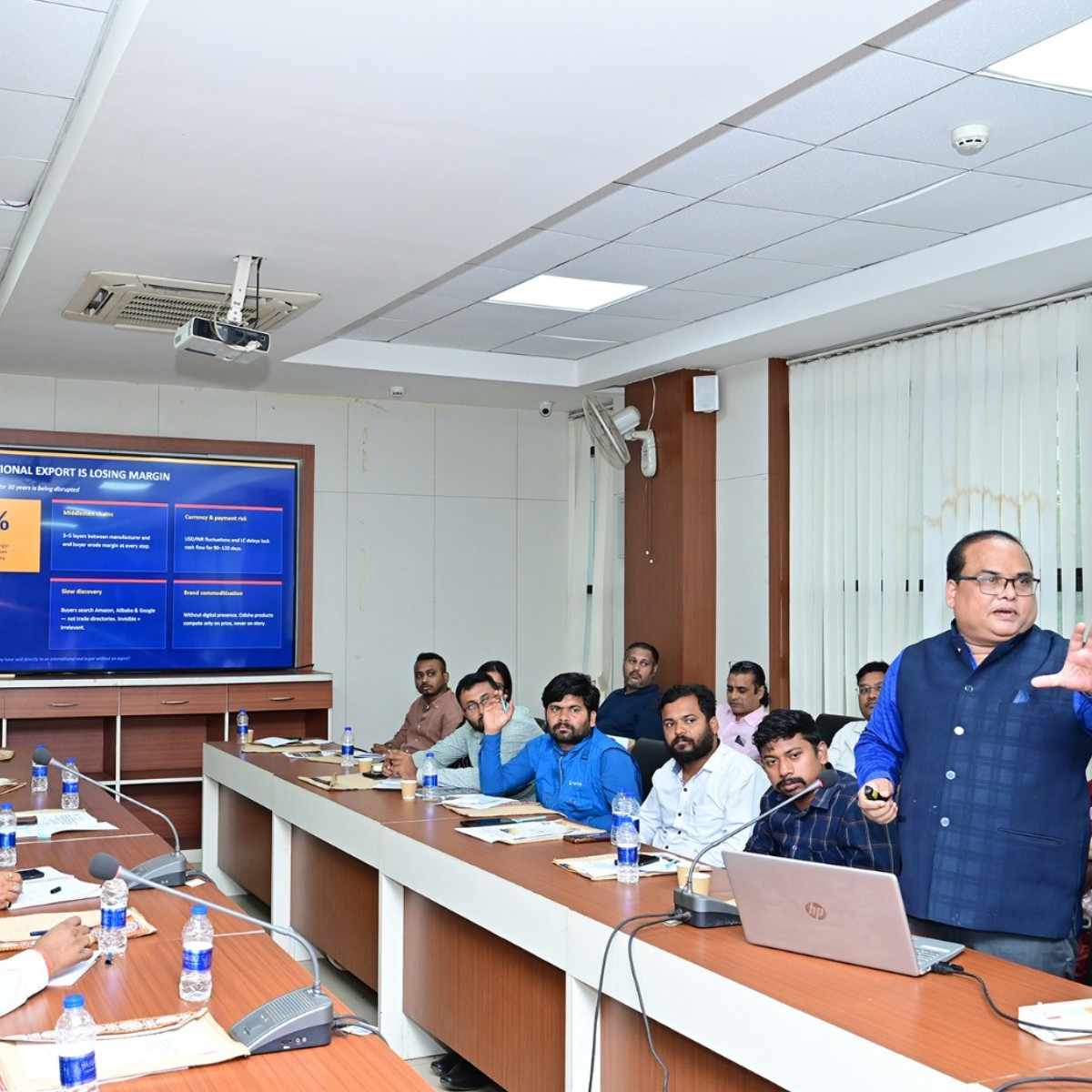
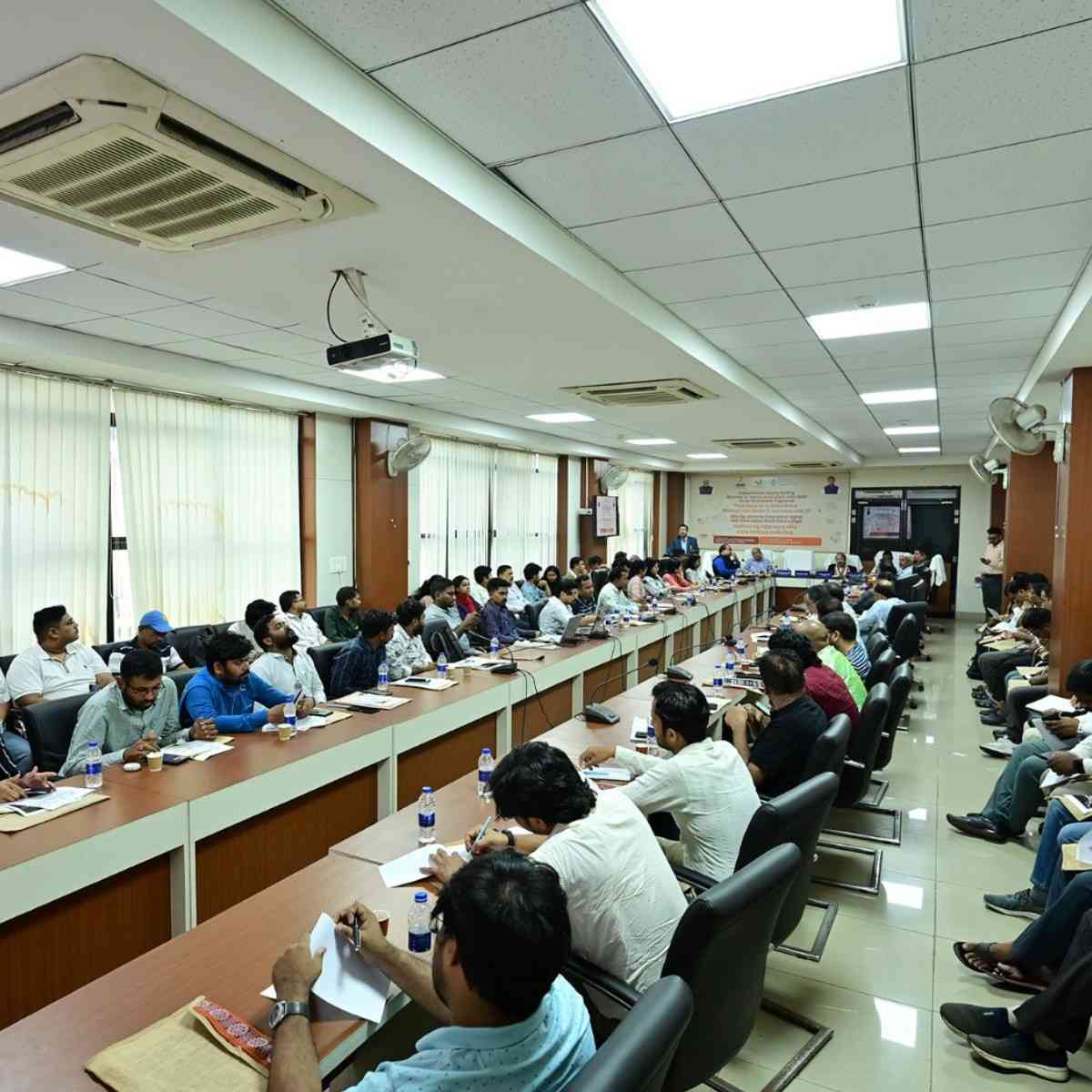
On March 31, 2026, an elite capacity-building summit was executed in Bhubaneswar to dismantle this legacy model. The objective: empower Odisha’s top exporters to transition from traditional export models to digital-first, cross-border e-commerce. By leveraging platform-led global commerce ecosystems (like Amazon Global Selling, Shopify, and Etsy) and integrating Generative AI, these founders can now capture global retail demand directly, establishing themselves as sovereign global brands.
Why Traditional Export Margins Are Decaying
Traditional export models are losing margin because they are blind to the end-consumer. A manufacturer in Odisha might produce a handicraft for ₹500, export it via B2B channels for ₹800, only to watch a western retailer sell it online for ₹4,000. The barrier to capturing that final margin has always been global discovery and cultural localization. Without deep pockets for international market research and western-tailored marketing, exporters were forced to rely on middlemen. Today, AI bridges that gap instantly—allowing an MSME in Bhubaneswar to generate US-tailored product catalogs, predict EU demand trends, and execute direct-to-consumer (D2C) logistics autonomously.
The “Global Brand” Curriculum
To elevate Odisha’s exporters, the session dismantled legacy B2B workflows and introduced a comprehensive, platform-led global commerce architecture. The curriculum was strictly optimized for immediate, high-margin execution.
Platform-Led Global Commerce
Navigating the transition from traditional wholesale to Direct-to-Consumer (D2C) exports. Exporters were trained on leveraging established digital infrastructure to capture global retail margins.
- Amazon Global Selling: Tapping into existing US, EU, and Middle East demand.
- Shopify D2C: Building sovereign global storefronts with localized currency and checkout.
- Etsy Ecosystem: Maximizing margins for high-value Odisha handicrafts and niche cultural exports.
AI-Powered Market Intelligence
Market research used to cost thousands of dollars and months of consulting time. Participants learned to use Generative AI prompts to extract real-time global demand trends.
- Identifying macro demand shifts in the US and EU markets via LLMs.
- Analyzing competitor pricing and product gaps on international marketplaces.
- Automating cultural localization for product titles and descriptions.
The AI Visual Asset Pipeline
A global brand requires world-class aesthetics. The curriculum introduced AI image generation to eliminate the bottleneck of expensive, traditional commercial photography.
- Synthesizing high-end lifestyle product photography for catalogs.
- Adapting visual assets to resonate with specific western demographic preferences.
- Enhancing legacy product shots for immediate D2C deployment.
Cross-Border Unit Economics
Selling a product is only half the equation; delivering it profitably is the actual business. The training mapped the shift from B2B container shipping to D2C parcel logistics.
- B2B vs. B2C export margin comparisons.
- Overview of modern D2C e-commerce shipping and automated logistics solutions.
- Mitigating return-rate risks in cross-border transactions.
Summit Operations & Mentorship


Frequently Asked Questions: Cross-Border E-Commerce & AI Exports
What is the difference between traditional exporting and cross-border e-commerce?
Traditional export models rely on a fragmented B2B pipeline where Indian manufacturers sell to foreign distributors, wholesalers, and retailers—who ultimately capture up to 70% of the final retail margin. Cross-border e-commerce export empowers MSMEs to sell directly to the global end-consumer (D2C) through digital platforms, allowing the original manufacturer to capture the full retail price and establish a sovereign global brand.
How does Generative AI help Indian exporters win in global markets?
Generative AI acts as an equalizer for local manufacturers competing against massive global brands. Exporters can use Large Language Models (LLMs) to conduct zero-cost market research, predict emerging demand trends in the US and EU, and instantly translate or culturally localize their product listings. Furthermore, AI image synthesis allows MSMEs to generate world-class, lifestyle product catalogs without the overhead of expensive international photo shoots.
Which digital platforms are best for Indian MSMEs to start exporting?
The optimal tech stack depends on the product category. Amazon Global Selling is the most efficient launchpad, providing immediate access to established consumer trust and international fulfillment networks. For sovereign brand building, Shopify allows exporters to create independent D2C storefronts with localized multi-currency checkouts. For specialized, high-margin products like Odisha’s handlooms and handicrafts, Etsy provides direct access to a premium global buyer base.
Why was the FIEO Odisha and Webverbal capacity-building summit necessary?
While India’s manufacturing quality is world-class, the digital transition requires systemic intervention. The summit—conducted in partnership with the Ministry of Commerce, FIEO, and the Dept. of MSME Odisha—was designed to transition the state’s top 100 exporters from legacy supply-chain entities into tech-enabled digital operators. The curriculum focused on dismantling traditional export friction using AI-powered market intelligence and modern D2C logistics.
Can small-scale manufacturers manage international D2C shipping profitably?
Yes. The unit economics of global trade have fundamentally shifted. Modern aggregator platforms and automated digital logistics networks have drastically reduced the cost of international parcel shipping. When a manufacturer eliminates the traditional B2B middleman, the significantly higher retail margin earned on a D2C cross-border sale easily offsets the premium cost of international shipping, resulting in higher overall profitability per unit.